The Sequel to Ashes of My Youth: A Tale of New York & The Wall Street Bombing
Life in the Tombs continues the story of New York crime reporter Johnny Moran in 1925
Chapter One:
To say I was untethered in those days would be putting it limply; in the open air of the Sixth Avenue elevated one March morning, bachelorhood drove me to a reckless act. Watching smoke drift above the Greenwich Village chimneys I noticed a young woman about my age sharing the downtown platform, whispering from a book she held like it was scripture. Her back was to the crowd in her maroon cloth coat, black hair spiking out the edges of her knit hat, the volume open across her gloved hands. I could see blocks of poetry on its pages, which clearly soothed her rides to work and maybe filled her lunch breaks too.
She looked up the silent tracks for the train, her eyes leaving the text long enough that her fingers dipped holding the book and she gasped as it tumbled from her hands to the track bed. Seeing her so unsettled, I laid my hat on the platform edge as a man leaves his watch when diving after a drowning child. Then I leaped down to the tracks.
People screamed like I was a suicide instead of a loveless idiot looking to impress. Her collection of Yeats had landed open on the wooden cross-tieshigh above the avenue. Falling that way had kept the book from slipping down to the flower carts and newsstands and candle sellers in the shadow-striped street.
To the others on the platform I may have looked demented, but long waits at this station had taught me I might safely mess around down there until the metal rails started clinking, heralding an approaching train. Until that sound, I was almost as safe in the track bed as up among the waiting crowd, lurked with pickpockets. So I made a show of brushing off the book’s jacket before hoisting myself out.
This was how strangers got entangled with each other in weepy movies, the kind of romance stories told when children ask how their parents met. Most of us owe our lives to our mother’s low standards in sizing up the candidates, and I saw my brave dive as a kind of audition with a comely stranger. But when I reached her on the platform, still panting a little from my efforts, my Yeats girl stepped away as if I had emerged from a sewer or was slightly on fire.
She accepted the rescued volume and warily thanked me, bringing out her change purse to compensate me for my risk. “Thanks,” she said. “It was a library book after all.” I smiled and waved away her money, which only seemed to spook her more. If I had almost died in the track, she was not impressed, and when I looked round I saw the others had also stepped back from the desperate character. “You must have a death wish, young man,” said an older woman on the crowd’s behalf. “If the train came, it would have knocked you a lesson.” I tipped my hat and took my banishment to the end of the platform. After five long minutes, my train did arrive, full of drowsy people unaware of the jumper they’d missed.
I wondered if uncorking a few lines of Yeats when I climbed from the track might have tempered my crazy impression. So I borrowed my own library edition and studied the poems over the coming weeks, keeping the same schedule each morning in case the Yeats girl appeared. Maybe my jump had been suicidal; I couldn’t say. I had not learned her name, but wanted to tell her next time, before she called the cops, how she had at least been right about the poems.
This was the low state of my young mind in 1925, when I was a busy reporter five years in. My companions were newsmen, bartenders, and prisoners. At twenty-three, I had gained a few of the regrets that would pang my thirties, and mysterious angers sometimes boiled to the top, like fat from a broth.
The harbor itself seemed gloomed over on the morning I planned to see a movie star and a kidnapper arrive on the same ship. The day had started slowly, delayed by the general fog that socked in most of the harbor, halting ferries and large arrivals. The man piloting our motor launch from the Battery hesitated as long as he could professionally bear it before surrendering to the squawking dozen newsmen wanting a ride out to board the Bremen, fresh from Le Havre. It was one of six or seven stranded liners awaiting inspection in the quarantine section off Staten Island. We finally pushed off from Manhattan into the curtain of mist, and were halfway there when we nearly prowed a tug that suddenly appeared, barn-red in the murk. The tug’s deckhand cursed us and swung a heavy rope in our direction, more to shame our captain, who should have known better than to capitulate to our bawling and venture out blind.
The reporters riding with me were hoping to see the movie star Jenny Allred returning from Europe, where she had found so many thousands of fans on her publicity trip that the gossips wrote she planned to demand a new contract with Louis Mayer. It turned out the world loved her as much as Mayer’s film posters had claimed.
We drew alongside the Bremen and climbed up the side ladder just a few minutes after the customs officials, but ahead of the medical inspectors, whose own launch had been slowed by the fog. I did not see how the photo men managed the ladder with their gear but they made this trip more often than I did as a crime reporter. And by the time we clambered aboard some already had their cameras loaded to fire.
A nervous steward opened Miss Allred’s cabin door; the others crowded in, then paused as a group, seeing she had not dressed for the landing, but remained sulkily in her pajamas. “Oh, come on, boys,” she said in her Bronx accent, which I heard despite the bodies blocking the door. Only Broadway actors had voices you might recognize then; a fair number of the silent stars were nasal and unpolished speakers ten years ago. Several questions were tossed her way, but she only wanted to discuss the reason she was not dressed for the docking that, if the fog cooperated, was a half an hour off. One photo man reloading left a gap in the press crowd through which I caught a sliver of the actress: her sullen expression beneath her short blond hair, teased by the pillow she’d just left; a Chinese slipper jouncing on one foot in rhythm as she spoke.
“I’m not going anywhere, fellas, until I get assurances my Manny is okay. It’s an outrage we couldn’t stay together in my cabin.” The press men eyed each other, scribbling “Manny (???)” in their notebooks. If this was this a confession about some Valentino type she’d met on the passage, there weren’t any film stars any of us could think of named Manny. And a liner company forbidding an actress her romantic visitors seemed unwise.
“Who is Manny, Miss Allred? And can we speak to him?”
“’Course not. Manny’s my pet cheetah I got in Paris. I heard Josephine Baker has one, and takes it into cafes with her on a jeweled leash. So I wanted one, too. They let me keep him in my suite at the hotel there, so I don’t see why he can’t be in my cabin with me, long as there’s room service. But they’re keeping him below, with the dogs and monkeys. I’ve been down a few times to feed him. He’s not used to the waves, as you can imagine. He had a hard time keeping his food down the first days out from Le Havre.”
The health inspectors had now arrived and shouldered their way through the reporters, pushing them back into the hall and closing the door for her interview. I had other, less glamorous business on the boat, and while my colleagues went off to search for Manny the Cheetah I carried on down to steerage to find my subject, a kidnapper in a White Slaver case who, like Manny, would be leaving the ship on a leash.
I found my man, who looked strangely bedraggled and sweaty, like he might be kept back by the health inspectors for the quarantine hospital. He was sitting on a deck chair brought downstairs, dressed in a cheap brown suit, fedora in his lap, ready for landing except for being handcuffed to a set of towel shelves in a supply closet. His caretaker stood agitatedly in the doorway, hands in his coat pockets as if the ship were moving and the pier in sight. He offered /me one of his cigarettes, but it was too early for me.
“What’s he got?”
“It’s not what he’s got. It’s what he took. I only let him out of my sight for a minute to piss, and locked him to the stall door. He popped something anyway.”
“To end it?”
He scowled. “No. To keep from being killed. Since he’s a witness now in this Slaver case he thinks they’re sure to kill him. But if he looks sick enough for quarantine he could later slip out of the hospital. It’s just Staten Island. He can live in all the woods they got like a pioneer.”
Escaping from the house of his Hoboken ward boss father, young Johnny Moran enters the world of Manhattan newspapers at the dawn of the 1920s, becoming a copyboy at Wilbert Grimsley’s New York Mercury, where its philandering star reporter named Price takes Johnny under his nightclubbing wing as the Volstead Act falls across the country. On Prohibition Eve, Johnny meets the unforgettable Belinda Harris and her husband, a Wall Streeter with a plan for making money that involves Mrs. Harris’s malevolent former boyfriend, whose escape from the city’s Tombs prison Belinda helps plan (with Johnny’s unwitting help). Against a background of government Palmer raids and anarchist reprisals, Ashes of My Youth builds to its infamous noontime explosion outside the House of Morgan. Looking back from the depths of the Depression, Johnny’s memoir of love and calamity is an exuberant and painful tale of jazz age New York, Ashes of My Youth.
We had switched from beer to a pair of hot rums dubbing around in a reporters’ bar across from the women’s prison downtown. Outside it was storming in late October style, the first chilly rain that gnaws like winter, and from our polished stools we watched the people tilt their umbrellas at one another like blind knights as they passed.
The rum warmed our hands and insides as we watched for the last haul of ladies to be brought in before the midnight deadline turned our stories into pumpkins. My friend from the Herald, Red Hughes, and I were waiting with our fellow news types for the killer Eileen Meola to take her police-escorted sashay into the prison. We were hoping for a long enough glimpse to write in our morning editions whether her young face was pinched with guilt, flashed defiance, or showed only a forced sleepy calm of the just. About eleven-fifteen, Red nudged my elbow and gave two knowing clucks as I was wringing the last heat from my cradled rum, “Here comes something.” The police wagon had rolled up with a full load of sisters.
The consummate legman, Red scurried across the street and claimed a perfect assassin’s spot for the ragged procession in the time I took to drain my mug and fumble for my hat. It was hard to make out the self-widowed Mrs. Meola, between the rain and the dark circle of cops that moved at cortege pace. At the back, one officer held a single black umbrella high above the group in a civilized gesture that offered little shelter from the spattering. When they passed us, though, the cops were shepherding not the killer of the week but just a brightly-dressed chorus from a Village brothel, the rain spotting their jade kimonos and pink house robes. The scent of their mingled perfumes was like a vivid homecoming, transporting me along a path of magnolia and rosewater to the cathouses of my youth.
By now, I was pretty hardened to the people I saw dragged in nightly on my job, but a few still drew my sympathy, even curiosity. In the old days, the raid of such a house would be unusual, but my eye was caught by something else. At the center of this bunch instead of a young widow was a plump, proud woman I vaguely recognized with hand-drawn eyebrows and crimped red hair. I doubted myself at first the way people cringe at any fleshy proof that time has passed. Then I saw she was a tumbledown version of one of the girls who had sometimes met me at the door of Mrs. Kennedy’s place in Chelsea in the old times, waving a cigarette in her scarlet pajamas. That West 25th street rowhouse had leered yellow light like a jack o’ lantern down its block while teasy piano lines tumbled from it and filled the young visitor with expectations of worldly adventure like he was approaching the Cunard pier.
Names are part of my business. True, we had been younger and working nocturnal jobs not known for their virtue, but considering how many faces a person met in her line of work, I doubted this older Angeline could make me out all these years later under my hat and Mac. She was used to shamefaced clients looking away when they saw her out of doors, but here she had spotted me directly staring, and turned to size up the gawker in the slanting rain.
“Do I know you, Mister?” she smiled. “Maybe I used to know you, eh Johnny?”
The sergeant who’d helped her down from the wagon chuckled and swabbed drops from his broad red face with a pocket rag. “Should I leave you two alone, Moran?”
“Lucky guess,” I lied. “I bet she’s met plenty of Johnnies.” Angeline winked. “All these reporters for me?” “Might as well be.”
The others laughed and there was a push from the back of the group. “Let’s move, ladies,” said the sergeant, still grinning. Angeline and the other sisters shuffled familiarly up the wet stone steps into the jail.
The press boys retreated back to the bar across the avenue to wait for our deadly widow, but she didn’t show that night. Mrs. Meola was still confessing somewhere else to a couple of poker-faced detectives, unspooling for their weary stenographer an epic line about her departed husband, left gutted and mute with a fruit knife. There was no press viewing of either Meola that night –the chatterbox or the corpse.
Long after deadline, we broke up the party and I said goodnight to Red. Then I wandered, a bit rum-lightened, in that hour where last call grudgingly gives way to the wholesome clop of the milk wagon, thinking about the faraway times dredged up by the sight of an ageing hooker in the rain. The rain by now had quit, but there was still a hanging chill in the air as I considered all the nights I’d spent in Mrs. Kennedy’s maroon rooms during that dangerous fall of 1920, soothing my grief over someone whose death I felt I’d aided, Belinda Harris.
As a young man coming to Mrs. Kennedy’s from the day’s arson trial or bank holdup, the trick had been to keep a reasonable likeness of Belinda in my mind’s eye when met in the gaslit hallway by Clara or Angeline or the one called Queen Mary because she recited Shakespeare in the dark. Then past the upright played by the old man in the cowboy hat–-days he built matinee crowds to a swoon at the 23rd street picture house–and then upstairs, where afterwards you breathed the lilac and cigarette scent of a figure lying back grandly on her elbows with one of your glowing smokes.
I spent a strange season at this game, and learned the piano player’s complete jolly repertoire, a boy attended by Mrs. Kennedy’s troupe until my troubles began to wear on the girls. At the time I had entered that leering rowhouse the first yellow leaves were curled along the city walks, and when I quit my game and came squinting into the light I found what Queen Mary would call a bare ruined choir. I have often been more lucky than smart, knowing you could stumble into the story that makes a career or the person who haunts the rest of your days while just eavesdropping in the butcher’s line or stooping to pick up your hat. Both had found me during my first months in newspapers.
Some of my friends, an eye on the hobo jungles and breadlines of the present, have written memoirs casting the early ’twenties in a golden light, as if Manhattan was then peopled entirely by movie actresses, baseball heroes, and gentleman bootleggers all waiting to slide your cocktail down the bar and invite you to that night’s rooftop rhumba. In these books, the author’s roving spot seems to flash on these characters anywhere it is pointed, as if reporters then were just wise-cracking caretakers in a celebrity zoo.
But in my experience, I often got little more than echoes of the famous people I had missed while covering shabbier storylines; waiters pointing out Arnold Rothstein’s favorite chair to me or losing at cards to the man who taught Louise Brooks to play whist; hearing fellow reporters brag how they shoved Dempsey back in the ring after he fell on their typewriters against Firpo; seeing Babe Ruth’s clay pipe hung above me while I ate my steak at Keens, or hearing Mary’s account of escorting the Babe home with another hired girl, stumbling together from the Taxi to his rooms at the Ansonia for a night that fizzled into watching the Bambino snore.
Often when I start to tell my own story of how I came to write my crime column, Life in the Tombs, it means I’ve stayed too long at the party. But hear me out: This is not my account of a golden time before the breadlines. It is mainly for the pleasure of summoning the living Belinda Harris that I’ve written about that autumn of the bomb and the flossy nights that came before.
Trains brought peoplefrom nearby towns, who sliced keepsakes from his dead brothers’ clothes where they lay; clipped hair from the manes and tails of their fallen horses and cut the strings off their saddles. In the street, he was nearly picked over for souvenirs himself before he was carried upstairs, where only the coroner’s word that he would die prevented a lynching.
Now up in Doctor Well’s office the deathwatch was underway for the last and youngest of the Dalton gang. Emmett had suffered more than twenty wounds in that day’s shooting, and his name had already appeared with the published dead from the raid when a newspaper writer made his way into the room where Emmett lay under guard. He opened a notebook in which to copy down the young man’s last statement, noting “The physicians attending him say he cannot possibly survive.”
One by one the pawed-over bodies of the gang were carried to Emmett’s room, where he confirmed each corpse as it was presented –Grat Dalton, Dick Broadwell, Bill Powers– his poise breaking especially when they stretchered in his favorite brother, one pant leg cut to the knee by souvenir hunters. Yes, Emmett choked, “I identify that as my brother Bob Dalton.”
Clearly young Emmett wouldn’t live to stand trial, and so was free to give a full account of his twenty years of life, especially the two violent years riding with his older brothers before he followed them to their deaths. “The bandit told his story with great difficulty,” wrote the newspaperman, who found “nothing coarse, nor brutal, nor villainous looking about him.” Not everything he said could be trusted, of course, since he might still be worried about the lynch mob returning. But he was the only living witness from the gang. Of his brother Bob’s plan for that morning’s double robbery, Emmett said, “We tried to persuade him not to do it, and then he called us cowards. That settled it, and we started for the scene of the raid.”
After verifying the dead and giving his best account of the botched robbery and gun battle, of being shot from his saddle while reaching a hand down to wounded Bob, Emmett mumbled “something about his dead brothers,” noted the reporter, and began to cry. The sheriff waved everyone out of the room.
In the morning, Emmett’s newspaper confession ran coast-to-coast. The Dalton gang’s ‘extermination’ shared front pages across the country with the quieter death of the English poet Alfred Lord Tennyson, whose famous Light Brigade rode to its own violent end. Nearly as remarkable as the story Emmett told was that he lived to read it.
In later years, Emmett had no illusions why people crowded around him in restaurants just to watch him eat his supper. He was a relic from what he called the “dangerously bright days” of the border outlaws; audiences came to his talks to hear a paunchy ex-bank-robber speak with a flourish of regret about his devilish times. Transformed by prison and the reckoning that claimed his brothers, he was a kind of Lazarus man. “The sea of time,” he lectured, “is strewn with wrecks, and most of these wrecks are caused by men and boys not following the true chart in the voyage of life.”
As he traveled the circuit, crowds loved to see the short film he had made about Coffeyville and imagine themselves dispatching bad men as those brave townspeople had done. Emmett lugged his big book of press clippings into each city’s newspaper office, hoping another reporter might write about the “pound and a half” of buckshot and bullets he carried inside him.
But he was a haunted curiosity. After educating packed houses in Waterloo, Iowa or in Janesville, Wisconsin, Dalton would cut loose in saloons, sometimes until he was dragged away by city police. He might start a fight over his speaking fee at a Bartlesville opera house, get clipped by an automobile while staggering across a Tulsa street, or brawl with officers who’d helped him back to his room in Rushville, Indiana; often he woke not in his hotel but parched and unshaven in a jail cell. He was newly discharged the night a crowd found him eating in Cherryvale, Kansas, where a reporter confirmed he looked stubble-cheeked and like he “hadn’t seen water recently.”
In the spring of 1912, a police sergeant spotted a dark-browed, middle-aged traveler dressed as a cowboy, weaving and looking a bit lost in the St. Louis Union Station. The cowboy and his walking companion, who seemed almost as far in the bag, were escorted to the train station’s police headquarters, where the sergeant asked the cowboy for his name and occupation to write in the blotter. His answer was adamant: “Emmett Dalton, sir, of Bartlesville, Oklahoma. My business? I am an ex-bandit, ex-train robber, ex-bank robber. I am showing St. Louis how I used to hold up banks.”The police sergeant was amazed to learn he had not only the last of the Daltons but the man standing unsteadily beside him was his older cousin Cole Younger, once of the James-Younger gang. Emmett was held for drunkenness, and Cole left his cousin sleeping on a jail bench in his cowboy clothes.
But it was while lecturing in Joplin, Missouri the following year that Emmett finally ran out of bail. After being hauled in for drunkenness four times in one week, he became trapped in the town’s jail, his sentence increased to thirty-one days. Dalton complained in the newspaper that Joplin’s facility was starker than the Kansas penitentiary where he had served. His complaint was read by a young miner living in Joplin named James C. Brown, who took a lifelong interest in the Daltons. His father had been a shoemaker in Coffeyville, Kansas in 1892, he told Joplin’s chief of police: “In the Coffeyville raid Emmett Dalton killed my father. I was just a little fellow, but I swore that I would some day avenge my father’s death.”
The father, Charles Brown, had been shot in the street after retrieving a Winchester from the hands of his fallen business associate. Brown aimed and was quickly shot down by the outlaws himself before he could fire. “I nursed an oath to kill Dalton for thirteen years,” young Brown told a reporter. “A few years ago I gave up the idea and now I want to do Dalton a good turn by getting him out of jail.” Brown offered to pay Dalton’s fine if it could be reduced, “I want to return good for evil.” According to jailhouse witnesses, Emmett teared up when he learned about the gesture by the shoemaker’s son, though he claimed it was Bob Dalton who’d killed the elder Brown.
The bullet-pocked Condon Bank, 1892 /Kansas State Historical Society
‘Love of my brothers’
The Dalton gang had formed two years before their fatal raid. Of the fifteen children born to Adeline Younger and Lewis Dalton (originally a Kansas City, Mo. bartender) thirteen survived, and of these, four became outlaws: Bob, Grat, and the teenaged Emmett, while Bill Dalton eventually formed his own Doolin-Dalton gang. Emmett, the ninth son, was born in 1871, and at 16 left the family’s homestead to work as a cowboy in the Indian Territory that became Oklahoma.
The eldest, Frank Dalton, was a fatherly, heroic figure to his younger brothers, who followed him into the Marshall’s service. But after Frank was murdered by whiskey runners during an arrest in 1887, the bitter shock would color his grieving brothers’ experience as lawmen, and, along with the job’s infrequent pay, tempt them to cross the line.
Any story about the Dalton brothers and the Coffeyville raid is also about their older Missouri cousins the Youngers, bank-robbing nephews of Emmett’s mother Adeline Younger. Cole Younger had ridden with Jesse James and before that was a Confederate raider with Col. William Clarke Quantrill. Many of the outlaws of the latter 19th century had been bushwackers who never stopped raiding and killing after Appomattox. The Daltons were all born too late to have fought in the Civil War, and Bob Dalton, the gang’s leader, had wanted to best his bandit cousins when he planned to rob two banks at the same time in the fall of 1892, something never accomplished even by Jesse James.
In 1890, Bob, Grat, and Emmett quit their work as deputy U.S. Marshalls in the Oklahoma territory after not being paid for some months.(Just before quitting, however, Bob used his office to shoot a romantic rival dead in a suspicious arrest.) Bob was charged in March 1890 for selling liquor to Indians, but jumped bail, and Emmett’s oldest surviving brother Grat, impulsive even by outlaw standards, was arrested for horse thievery that September, a capital offense. The gang robbed four trains in Indian Territory from the spring of 1891 to July 1892, when Grat escaped custody and returned to the gang.
Bob targeted two banks in a town the brothers knew intimately, Coffeyville, having spent some years living on its outskirts in their parents’ house. Hitting banks in a place where they were known might be less risky than robbing yet another train, he explained to the others, but still they’d wear disguises. “Bob said that he could discount the James boys’ work and go up and rob both banks at Coffeyville in one day,” Emmett said in his statement after the raid. “I told them I did not want any of it at all.” His older brothers prevailed over his wishes for a last time. Though the scheme seemed like hubris, Emmett rode loyally on to Coffeyville “out of love for my brothers.”
Bob promised the Coffeyville job was rich enough to be the gang’s “last trick.” So, on a clear morning, October 5, 1892, after breakfasting on biscuits and hardboiled eggs camped in a thicket outside town the Dalton gang donned beards and side-whiskers and headed out. Along the way they passed “the old farm home of our parents,” Emmett wrote. “The big light-green house and the red weathered barn stood out clear and remembered in the still autumn morning.” According to later reports, what witnesses there were took these five purposeful riders to be a deputy U.S. Marshall and his posse returning from a mission to the nearby Cherokee Nation.
The Raid
David Stewart Elliott had been a civil war colonel and newspaperman back in Pennsylvania before he moved to Kansas and became the editor of the Coffeyville Journal. Col. Elliott knew a Dalton when he saw one and they knew him, since in his other business as a lawyer he had handled a divorce proceeding for their mother. He saw most of the fighting that day, and soon after produced a commemorative anatomy of the bloody raid. As the men rode in that morning, “No arms were visible on any of them,” he wrote. “Their coats were closely buttoned and their broad-brimmed black slouch hats set forward on their foreheads. Reaching the junction….the horses’ heads were turned east, and the animals urged into a brisk, swinging trot.”
The Daltons had planned to use a particular hitching rail they remembered in town to conceal their approach to the banks. But they discovered their hitch replaced with a pile of rocks dug out for a new curb and gutter, forcing them to tether their horses in a more public spot. As they nervously walked across the town plaza, Emmett remembered, “Our appearance was not unusual although each of us had our revolvers at our side and all carried Winchesters.” Three of the gang (Grat Dalton, Dick Broadwell, Bill Powers) entered the C.M. Condon & Company Bank while Bob and Emmett walked toward the First National across the street. The gang’s disguises quickly proved useless when a wagon driver named Charlie Gump saw men pointing rifles at employees inside the Condon Bank and guessed pretty easily what was happening.
Almost no one in Coffeyville was armed when the gang rode in that morning around half-past nine —even the Marshall had left his firearm at home. But, while not carrying weapons, they knew where to get firearms and how to use them. The town’s two hardware stores functioned as militias that day, the proprietors arming the town, starting with Gump, uncasing rifles and ammunition as soon as word came of the attack on the banks. Gump left his wagon to grab a Winchester inside the Isham Brothers & Mansur hardware store, shouting, “There go the Daltons!” loud enough, he boasted later, “they could hear me in Nowata—and that’s twenty-four miles.” As word flew around the square that a robbery was on, “Men and women came running with shotguns and pistols and pocket knives.” Gump became the first person shot when Bob Dalton fired his rifle at his gun hand. Gump fell in pain, his new gunstock shattered, and was dragged back inside the store by friends.
souvenirs cut from the Daltons’ trousers/ Kansas State Historical Society
The Response
Then the cashier of the Condon Bank, Charles Ball, told a risky lie that turned the Daltons’ raid into a battle. When asked hotly by Grat Dalton to unlock the Condon Bank vault Ball claimed that it was on a timer that wouldn’t open for ten more minutes; in fact, it had been unlocked since eight o’clock. (He may have read how the brave cashier at Northfield, Minnesota stalled Jesse James by saying something similar in 1876.) Ball’s lie gained time for those outside the building to secure guns and train them on the bank’s front windows and open fire. The Condon Bank later showed 80 bullet marks.
From Emmett’s later wistful perspective Ball’s maneuver had cost lives on both sides by giving the town time to arm and making it a battle. If the Daltons had just been allowed to leave clean with the money no one would have been hurt.With three of the gang under siege at the Condon Bank, the other half of the double-robbery went closer to plan. But, upon hearing the shots outside, Bob and Emmett still had to escape from the back door of the First National into an alley, where they waited, Emmett holding a sack filled with $23,000 cash.A clerk named Lucius Baldwin appeared about fifty feet from them, holding a new revolver from Isham’s, and walked skittishly toward the brothers, who may or may not have commanded Baldwin to halt before Bob Dalton fired his Winchester into his chest. He died three hours later. As the two turned the corner from the alley, they saw George Cubine, who had once made boots for the Dalton boys, standing before his shoe shop holding a rifle.One of them killed Cubine with a single shot before the shoemaker Charles Brown, whose son would pay Emmett’s bail years later, stooped to retrieve Cubine’s gun. “As he rose up Bob fired again,” Emmett claimed. “Brown fell dead.”
H.H. Isham was a transplanted New York businessman and marksman and senior partner at Isham’s Hardware, which looked out on the Condon Bank. Isham settled in with a rifle at a second floor window waiting for his shot and was joined upstairs by several other shooters under his command. As the three robbers fled the Condon bank a barrage from Isham’s snipers hit Grat Dalton and Bill Powers before they’d gone twenty steps, Col. Elliott noted, and “The dust was seen to fly from their clothes.” Powers desperately tried a storefront door that proved to be locked, then made his way to his horse, where he was shot dead trying to mount. Grat Dalton was already wounded when he spotted Marshall Charles T. Connelly in front of him, glancing away toward the outlaws’ tethered horses. Grat shot the distracted Marshall in the back, killing him, but Grat and the remaining gang were now trapped in what would be called ‘Death Alley.’ “All the time, I had expected the firing to die away,” wrote Emmett, “to feel myself on the back of my horse plunging away…But there was no let-up.”
A Bavarian immigrant liveryman named John Joseph Kloehr aimed a new Winchester from Boswell’s hardware and shot Bill Broadwellas he tried to ride away down the alley. Broadwell hung on long enough to die a half-mile outside of town. Then Kloehr hit Grat Dalton twice, the second time through the throat. “The bullets, as they passed up the alley…had the peculiar ‘zip’ that accompanies a minie ball,” admired Col. Elliott. Grat died still wearing his false whiskers and carrying the Condon bank’s eleven hundred dollars inside his vest. Also wounded by the Isham’s shooters, Bob Dalton rested against some piled curbstones near the city jail, where John Kloehr finally shot his third member of the gang at the same moment a town barber named Carey Seaman hit Bob with a load of buckshot.
The fatal ‘Death Alley’ /Kan. State Hist. Society
Though wounded now in his hip and with a broken arm from another bullet, Emmett Dalton climbed on his horse with the sack of money. But instead of following Dick Broadwell out of town he turned back to ride through the gunfire toward the plaza to reach Bob, who lay unbearded and dying on the ground. He reached down one hand to pull his brother onto his saddle with the moneybag. As he did, Carey Seaman fired both barrels again, blasting Emmett from his horse with a full load of shot in his back. He fell, along with the sack of money.
“Then came darkness and quiet,” Emmett wrote. “The popping of the guns died away. The brightness of the sun ceased and all was still.” On the ground, he surrendered his two pearl-handled pistols to Col. Elliott, who had been decent to his mother. The battle had lasted roughly twelve minutes from first shot to last and left four townspeople dead as well as four of the five robbers–two Dalton brothers (Bob and Grat) and the gang’s two other bandits (Powers and Broadwell). The outlaw corpses were left for a time sprawled where they’d fallen or stood up singly for ghoulish portraits while the coroner was telegrammed for an inquest.
The gang, minus Emmett/ Kansas State Hist. Society
Afterlife
Dalton spent five months in the hospital before he had recovered enough to be tried for the gang’s crimes. Given a life sentence, his prison behavior impressed his wardens enough that the Kansas governor commuted his term after almost fifteen years. He emerged in 1911 furious over all the “weird, bloody, catch-penny, yellow-backed novels” pitching lurid fables about his brothers, especially those libeling the noble Frank Dalton, who had died as a lawman before the gang was formed. After Emmett’s release, he married his boyhood sweetheart, Julia Johnson, and made a return visit to Coffeyville, where he was largely welcomed to make his three-reel movie evoking the gang’s last moments. People liked being reminded of their triumph over the gang.
Emmett appeared on double-bills with “the world’s most noted feudist,” the murderous patriarch Devil ‘Anse’ Hatfield, whose own brief film about the Hatfield-McCoy war Emmett had produced and sometimes introduced on alternate nights with his Dalton lecture. In 1918, Emmett finally published his own book about the Daltons, Beyond the Law, and took it to Hollywood, where Emmett sensed there was a great demand for “good, snappy Western historical pictures, built on facts.”
Hollywood
Emmett (second from left) with some of his Hollywood Western friends, including the cowboy detective Charlie Siringo (with rifle), 1927 /Kansas State Historical Society
Hollywood was obviously the next place for his educating work about his days with his brothers. The era Emmett had known as a border outlaw was being translated to the screen, its myths largely intact. It was natural that Emmett would come to Los Angeles with his book about his brothers,where he met the lanky, long-faced silent film star William S. Hart, known for the authenticity of what he called “horse operas”. Hart happily added Emmett to his group of Western friends.
In the resulting film, Beyond the Law, Emmett played himself as a young bandit and appeared across the country, frequently narrating multiple showings at each movie house. But he couldn’t appear everywhere to support the film, which ended up with a disappointing box-office. Emmett also starred as the “Man of the Desert,” in which a mysterious rider on a dark horse appears out of the hills to aid settlers in trouble. With his wife Julia he settled in a modest stucco house in the Hollywood hills, did other acting work, sold scenarios and increasingly involved himself in real estate.
Apart from his own screen work, Emmett remained skeptical of much Western storytelling, especially the flashy conventions of movie gunfights: “Personally I have met hundreds of bad men, hard men, shooting men, killers, both peace officer and outlaw, and I have yet to see the first notch on any of their six-shooters.” Never had he seen anyone ‘fan’ his pistol, nor shoot from the hip or “waste precious ammunition by using two guns simultaneously.” However, his objections had little effect. Audiences liked to be told what they were watching was authentic, but they enjoyed trick-riding stunts and twirling gunplay more.
Emmett finally sued a studio over a film that too closely resembled the life of his brothers. But it was too late: the Daltons’ story had become too well-known (from his hard work) to be considered legally unique. In 1925, Emmett also brought a million-dollar libel suit against the publisher of True Confessions Magazine for running stories about his criminal career whose source was a man who regularly posed as Emmett Dalton. In death as in life, people loved to read about the Dalton gang’s escapades, true or not.
Ashes
During the Prohibition years, Dalton jealously watched as new criminal gangs of received folk-hero treatment in newspapers. He claimed there was no such national ‘Crime Wave’ as J. Edgar Hoover alleged, just more new laws being broken. “Those fellows gunning around here now aren’t outlaws,” he told a reporter in 1931. “These gangsters today, they even have bodyguards….Imagine Jesse James or one of the Dalton boys with a bodyguard.”
As an answer to the new era of Dillinger and Capone he produced a slicker, more romantic book about the Daltons, whom he now called “the most spectacular and widely roving band of border outlaws”. When the Daltons Rode describes its author unapologetically as “an outlaw of the old school” whose life had seemed to peak riding with his brothers when he was nineteen: “I can still hear the echo of my horse’s drumming feet as I careened out of a hectic New Mexico mining camp, a posse at my heels and the protesting yelp of guns in my ears.”
Emmett remained a professional ex-bandit in Hollywood to the end, but returned to Coffeyville in 1936 to break bread with Charlie Gump, who’d sounded the alarm that day and got wounded for it by Bob Dalton. Gump had stayed on in the town and was the last living of its heroes who’d brought down the bandits. The two surviving combatants, shot on opposite sides in the battle, got together over that Thanksgiving. Newspapers billed the meeting as a burying of long-held grudges, but according to Gump, “I always thought kindly of Emmett. He was the young one and his brothers dragged him into it.”
Emmett died of a stroke the next year, having felt the pull of his lost brothers to the end, at 66. His wife announced his wish to the newspapers to have his ashes sent from Hollywood back to Coffeyville to be interred among the gang, taking his place beside Bob, whose idea the double-robbery had been. But the ashes were sent instead to his pious sister Leona in Kingfisher, Oklahoma, who buried them in the Dalton family plot discreetly after dark, and requested there be no marker until after her own death. When Emmett’s wife Julia died in 1943, Emmett’s marker at last went up, bearing a hopeful declaration the last of the Dalton boys might not have chosen for himself, HERE I LAY SLEEPING/ BUT NOT TO REMAIN/ I LOOK FOR THE COMING OF JESUS AGAIN.
But she might just as well have quoted Emmett himself: Outlaw fashions change, but lawlessness runs on forever.
I was not yet much of a sports fan, except for watching the jumps and spills of Evel Knievel, when my family moved from Long Island to a cranberry bog town outside Boston in 1970. Almost everyone there was crazy for Bruins hockey, especially for the chestnut-haired idol of that bareheaded era, Bobby Orr, whose famous overtime goal won that year’s Stanley Cup. But beyond hockey, Hanson still buzzed with many sports terms for a young outsider to decode (What was a Havlicek, for instance, or a ‘green monsta’? Or a Yaz?).
I bluffed my way along through the Bruins’ championship season of 1972 as the games dominated the morning bus stop, recess period and gym, then reappeared on my ride home. A person had to go pretty deep into the woods not to hear about Orr or Derek Sanderson or Gerry Cheevers, and then it still could happen.Eventually hockey intruded even into that year’s third grade poetry contest, an event in which I’d hoped to make a mark with my tribute to the black and spiny old crabapple tree that grew in our front yard.My submission was sure to crush whatever odes to grandmothers and puppies and favorite lost dolls my classmates turned in. An A grade, a gold star, perhaps the honor of a P.A.reading during morning announcements, all seemed in easy reach.
But a girl in my class had her own ambitions. She had turned in something unstoppable—as timely as it was heartfelt and powerfully simple–and as the teacher read the piece aloud to us her eyes grew wet at the corners.(It needs to be heard in a Ray Donovan-style South Boston accent):
He’s numba four
He’ll always score
Who could ask for more?
Than Bobby Orr
Looking around the room as the class swooned for Bobby I felt my beautiful old tree bend to breaking.I knew who had won; it was all over the teacher’s damp face. This was my introduction to the power of cheap sportswriting.
The poetical tree, with friend (and knife), 1974
Following my defeat, I began to cut away at my ignorance by watching ABC’s Wide World of Sports each Sunday; at first for its dangerous promise of Knievel stunts, but eventually this program brought me along on Muhammad Ali’s second march to the Heavyweight title (already in progress). It was Wide World of Sports (and then its wonderful goofy companion, The Superstars, in which star athletes competed far outside their lanes of expertise) that slowly filled in parts of the athletic landscape.
TheSuperstars had been the brilliant idea of Olympic skater Dick Button: pit the best athletes from a wide swath of sports against each other in a kind of less demanding decathlon of bike races, 100-yard dash, obstacle course, bowling, swimming, weightlifting, tennis. Since many mainstream sports still remained hazy to me the contests on Superstars seemed to have real gravitas, even if played out in vacation locales: A tennis player and a skier dueling down the stretch on bikes in the Florida sun could be very exciting if you’d never seen real cycling.
There was Joe Frazier, whom I’d watched one month earlier on Wide World get lifted off his feet and lose his heavyweight title to the huge new champion George Foreman, struggling in a swimming pool on Superstars’ first episode, lagging behind a car racer, a track star, and a skier. Frazier was nothing if not courageous—before his destruction by Foreman, he had envisioned himself throwing 300 punches per round to survive, and he entered his swimming heat on The Superstars because, he explained later, How could he know if he could swim well without jumping in and trying it? It turned out he could not. (While Frazier’s swim is famous, he did not in fact “almost drown” as often reported, and at least proudly finished: the Reds’ catcher Johnny Bench was disqualified from these same heats for walking on the pool floor.)
I started tracing various Superstars guests (Peter Revson, Rod Laver, Elvin Hayes, Rod Gilbert, Jean-Claude Killy) back to their day jobs racing cars, playing tennis, skiing down mountains. For me, the show was less an offshoot of more serious programming than it was a sports primer. Except for Ali, many athletes still didn’t speak for themselves in the early ’70s beyond what was routinely asked by sports reporters. But on Superstars, where there was a lot of standing around waiting their turn, the athletes were called upon to banter throughout the day as Bench outbowled Baltimore’s great quarterback Johnny Unitas or a race car driver played a hockey star in seemingly epic Tennis.(Reggie Jackson both competed on the show and took quite naturally to conducting sideline talks, crossing over as an interviewer to eventually co-host with Keith Jackson.)
By the time Ali challenged Foreman in Zaire in 1974 I was almost up to speed: My room was properly wallpapered in posters of Muhammad as well as Bruce Lee, but still no Bobby Orr. I could recite the heavyweight champions starting with Boston’s John L. Sullivan, and when the Red Sox made the World Series the following year, I knew about Yaz and the green wall he patrolled, as well as Lynn and Rice and Fisk.
The Superstars lasted into the ’80s, and even had its own spinoff, The Superteams, where you could watch entire NFL squads settle things once and for all on the field of tug-of-war. No corporate lawyer would allow such risky behavior by contracted athletes today. It was something from the age of lawn darts and school trampolines. But I still remember early Superstars champions Bob Seagren and Kyle Rote, Jr., a pole vaulter and American soccer player, as figures from the ’70s sports pantheon, just below Henry Aaron and even Orr himself. As the announcer Jim McKay explained, we’d seen them beat the best of the best.
Every field has its characters, but sports still had an oversupply when I later started writing about it for Brian Parks at the old Village Voice. Brian, who was really a playwright, shared my bent for the odd or cultish: I profiled Mike Tyson’s gentlemanly hypnotist, John Halpin; a train-crash investigator whose passion was the physics of Babe Ruth’s home runs; I did an obituary of the Wave, and, without meaning to, snapped my humerus bone doing a participatory piece on arm wrestlers.
A number of profile characters I found out on the training floor of Gleason’s gym in Brooklyn. Johnny Mondello, a quotable old trainer with an unforgettable face like a sad beagle, attracted not just aspiring fighters but also caught the eye of artists and a movie scout for a small role in a crime film. When the relevant script pages were faxed to the gym, however, Mondello demurred, “I can’t have my sister hear me sayin’ all them swear words.”
Bobby Orr does not appear in this collection, but there are pieces on urban fishing, the costs of Olympic swimming, De La Hoya at his beginning and Ali at the end, the mystery around Bobby Thomson’s home run and watching my grandfather catch his first foul ball. There are also tributes to some master chroniclers, A.J. Liebling and Bill Heinz, and the great amateur imposter George Plimpton.
The book opens with Rocky Graziano,the middleweight champion who showed Brando and Newman how to swagger like tough guys, and it ends with Rocky’s reform school pal Jake La Motta, who taught De Niro to tell a joke. To quote the poet,‘Who could ask for more?’ –N.W.
Studying the Rock
Rocky Graziano, Tough-guy Muse
Hood makes good: Rocky’s harrowing masterpiece
In the late 1940s, a young Nebraskan actor named Marlon Brando had been starring for several months in A Streetcar Named Desire on Broadway when he was contracted to play a fighter in a TVpilot, Come Out Fighting! For the role, Brando decided to secretly study the famous New York tough guy with the hoodlum backstory, middleweight Rocky Graziano, and began training and hanging around Stillman’s on Eighth Avenue, where Graziano’s workouts regularly packed the house. As he worked out, Rocky began to notice the young blonde kid watching him day after day. From his memoir:
This kid took to hanging around me in Stillman’s gym, training along beside me, shooting the breeze. He looked like he might have been a fair fighter once, but he was in bad condition for the ring now and his punch looked slow. I felt sorry for the kid. He rode around town on a secondhand motorcycle, wearing patched-up blue jeans. Whenever we went downstairs for a cup of coffee or anything, I always paid for it.
After about a month of training, Brando asked Rocky to take a lunchtime walk one day downtown to 46th Street, where he pointed out a name on a theater marquee. “‘Rocky,’ he says, ‘that’s me. That’s where I work. I want you and your wife to come see me.’” Then he thanked him, which Graziano found odd until a few months later when, “I am watching the television, and they introduce this show about fighting and his name is on the screen, and then he comes on and it’s me! The son of a bitch is talking like me and walking like me and punching like me! How you like that? I got conned into learning this bum his part by a motorcycle and a pair of blue jeans.”
The pilot, Come Out Fighting!, was not picked up by the network, but this would not be the last impersonation of the charismatic Rocky.
Graziano had no trouble explaining his tremendous popularity with the public: “All this happens to me because I got a hard, fast right punch, because I’m a mean, wild bastard in the ring and a guy who likes everybody outside the ring.” To the sportswriters of the 1940s, he was a gift: the most exciting middleweight since Stanley Ketchel, a former New York street hoodlum whose vivid life and brawling style could fill any editorial space as easily as his wars with Tony Zale packed ballparks. Looking back decades later on Graziano’s violent rise to the title, the sportswriter W.C. Heinz called it “An event that involved me as did none other among the hundreds I covered in sports.”
Before Down These Mean Streets or Manchild in the Promised Land—and long before his boyhood friend Jake La Motta’s Raging Bull—came perhaps the greatest of the New York street gang memoirs. Somebody Up There Likes Me (1955) is Graziano’s cornily-titled but harrowing survival story, tracing his journey from the East Side slums to the middleweight title by way of numerous protectories, reform schools and prisons. Written with Rowland Barber, the book is fantastically observed, by turns violent, funny and filled with rage, like the Rock himself, and competed for that year’s Pulitzer Prize. “I was always part good, part bad,” wrote Rocky, “until I grew up and smashed the devil out of me.”
No one else could beat the devil out of him:not the truant officers who stalked him or the cops who regularly smacked him around the East Side neighborhood; not his hard-drinking father, a disappointed former boxer who amused himself by matching Rocky in fights against his large older brother; not the kids from rival blocks he fought in the street or the guards who clubbed him and stuck him in solitary. Born Thomas Rocco Barbella in New York City in 1919, Rocky was not a fan of authority from early on. “I quit school in the sixth grade because of pneumonia,” he often joked. “Not because I had it, but because I couldn’t spell it.” Two twin siblings died of it, though, and the family’s poverty asked a lot of his mentally fragile mother, “If my mother had been around all the time, and kept her health, I might have been a better kid.”
Rocky Bob, as he was then known, was unloaded on his grandparents, moving from Brooklyn to the Lower East Side. There he found more than enough to eat, which was a novelty, as well as his own room. But in the streets below their tenement windows he and his 10th Street mob lived a different life, making easy thefts from pushcarts and mom-and-pop stores, social clubs and subway vending machines. “We stole everything that began with an ‘a’ ,” he remembered. “[A] piece of fruit, a bicycle, a watch, anything that was not nailed down.” Often they escaped to the rooftops to split the loot.
After hearing that Peter Stuyvesant had been buried with his silver peg leg and gold watch, young Rocky and a friend bought shovels and spent most of a night digging up Peter’s churchyard plot until a nightwatchman spoiled their treasure hunt. Even when he wasn’t in trouble, Rocky was often in danger—twice hit by cars while playing in the street; once, when his running rooftop leap fell short; Rocky only survived by hitting a series of clotheslines on his way down. He became a veteran of children’s court, protectories, the Tombs, Raymond Street Jail, Rikers Island, and Coxsackie reform school, where he was reunited with his friend Jake La Motta, who used to come down from the Bronx to go on thieving adventures with Rocky on the Lower East Side. At Coxsackie, La Motta supplied him with comic books for his stretches in the hole. “It was a long time,” Rocky explained later, “… before I learned that boxing was the only way to burn up all this energy that used to steam around inside of me.” Baited by friends into entering a boxing tournament, he became city welterweight amateur champion, then hocked his medal.
At 20, his parole case came before Lou Gehrig himself, who, struck by his tragic illness, had been given a job on the parole board by the mayor. From the bench, Gehrig asked Rocky what was his favorite sport, listened to his answer about the merits of baseball, then sent him back to reform school. It was the unkindest cut of all for Rocky, who claimed he said, “Go to Hell, Mr. Gehrig” to the dying Yankee great. Only two months after his next release from reform school the Army took Rocky, in January 1942. It was not a perfect match, like a prison full of “legitimate guys” who didn’t want to have fun. Rocky went AWOL several times, served some months in the hard Governors Island brig and at Leavenworth, and during one of his escapes began boxing for money under the assumed name of a guy from the old neighborhood, Thomas Graziano, who was safely “out of commission.”
Between 1942 and 1944 he went 35 and 6 (with five draws) and by 1945 was a crowd favorite, a volatile boxer with a right hand powerful enough to compensate for his lack of polish. His knockout win over welterweight champion Freddie Cochrane (in a non-title bout) was RingMagazine’s Fight of the Year for 1945; he fought him again two months later with the same result. He beat Al “Bummy” Davis and then retired Marty Servo, leaving Rocky as the top challenger to Tony Zale, returning from the war to defend his frozen middleweight championship. Their great rivalry would now begin.
Excited to cover the big bout in 1946, New York Sun columnist W.C. Heinz got his own break when the great Damon Runyon,though mute with throat cancer,recommended him on a cocktail napkin to the editor of Cosmopolitan for an assignment. Having mastered the format of the 750-word sports column, Heinz knew Zale and Graziano were fighters whose styles would “mesh like gears.” Rocky could carry the kind of epic story he had in mind, “Day of the Fight,” which eventually ran to 6,000 words, reporting the Rock’s words and movements for an entire anxious day, from opening his eyes in the hotel room that morning to having them closed by Zale under the lights at Yankee Stadium that night in the sixth round of “one of the most brutal fights ever seen in New York.”With “Day of the Fight,” Heinz discovered the kind of long, beautifully observed profile he would do the rest of his career.
After the excitement caused by their vicious first bout, Graziano and Zale agreed to meet again for the title on July 16, 1947. Rocky had meanwhile lost his boxing license in New York for failing to report bribe offers allegedly made at Stillman’s over a fight that ultimately did not come off. The National Boxing Association did not at first honor New York’s decision, and so the rematch was made for Chicago. It was as savage as its predecessor and would beFight of the Year for 1947.
A generation of moviegoers who never saw Rocky in action would nevertheless recognize one dramatic moment from the rematch. Between the 4th and 5th rounds, with Graziano bleeding above his left eye and with his right one swollen closed, his trainer opened the eye with the edge of a quarter he retrieved from his pocket. (This scene was copied by Sylvester Stallone for Rocky, whose hero’s name, Rocky Balboa, also echoes Graziano’s original Rocco Barbella.) Cutting the eye lowered the swelling enough that Rocky could drop Zale in the sixth round and then pound him out against the ropes with 30 unanswered punches. Then, standing in the bright, hot ring and looking more like the fight’s pulpy-faced loser than the new middleweight champion of the world, Graziano was offered a radio mike into which he made the triumphant boast that came to define him: “Hey Ma—Your bad boy done it. I told you somebody up there likes me.” Somebody had taken a long time to show it.
Rocky would be champion for less than a year. A third fight with Zale was granted for Newark in 1948, which Rocky lost in three. “What I didn’t realize was that with that left hook in the third round, the last of Rocco Barbella had been knocked out of me,” he remembered. “The wild kid was gone forever, the streetfighter and the troublemaker.” He fought four more years, dropping Ray Robinson in his final title shot, before Robinson put him away. He was no longer champion, but he was kind of iconic: He had an authentic presence. There were lots of guys now who, as Rocky said, “got kicks out a the way I used to talk.”
The writer Gerald Early first pointed out (in an essay called “The Romance of Toughness”) the fact that Marlon Brando, James Dean, and Paul Newman all studied the Rock for acting roles. After Brando came Dean, hired to play Rocky for Robert Wise’s film of Somebody Up There Likes Me. Dean had just begun researching the character when he died in a crash of his Porsche convertible in California in Sept. 1955. Newman (who first replaced Dean as a boxer in a TV adaptation of Hemingway’s “The Battler”) was then cast in the part that made his career.
Apprenticing under Rocky, Newman learned his hunched forward, shoulder-rolling gait, his sideways talk and hoodlum accent, how to sit a porkpie hat just right and turn on a dime from street banter to violence. Rocky had a presence that actors envied and he later showed a knack for comedy. “Rocky got a lot of laughs on account of the strictly New York City accent he had, like me,” Jake LaMotta remembered. But according to Paul Newman, when he brought his tough guy mentor to a class at the Actors’ Studio, and asked if Graziano, who was done with fighting, might like to take acting lessons, Rocky turned him down. “What for?” he answered, listening to all the New Yorkese being rehearsed around the room, “They’re all trying to talk like me.”
Indeed they were. There is a direct line in method acting from Rocky through Brando, Dean, and Newman to De Niro, and, though his own acting largely consisted of Raisin Bran commercials and variety shows, it is pretty easy to imagine Graziano in a movie turning from the bar and authentically growling,“You talkin’ to ME?”
The 1956 film of Graziano’s life received excellent reviews, as did its star Paul Newman. Rocky, of course, loved the movie, which opens with his on-screen testimonial: “This is the way I remember it…definitely.” Only one writer who’d known the real Rocky early on, W.C. Heinz, felt that something of his wise-guy charm was missing from the performance. Newman had “caught the sullen moods,” he wrote, “but not the exuberance that made the fighter exciting just walking down the street.” You can’t learn that exactly, but many have tried.
(Published in TheStacks/Deadspin as “How Rocky Graziano Became Boxing’s Greatest Muse,” 1/18/16)
The City Angler
Adventures with Seagulls, Bats, Even Stripers
The Upper Bay, with distant Verrazano welcoming blues and stripers /Nick Ward
My Uncle Robert Strozier was the first big city fisherman I knew. In addition to casting all over Florida he had worked the murky waters around New York City, where he once landed a seagull on the Hudson River with just a rod and reel and his nimble wrist. Throwing a cast off the shore of Riverside Park one day in the early 1970s, he looked up in horror at his zigzagging line to see a gull pulling at the far end of it. Two scruffy men soon emerged from a tunnel to share with Bob the secret for landing a gull. After Bob had reeled the bird down out of the sky, one of the men placed his beaten old hat over the gull’s head to calm it while they eased out the hook.
When I was a kid, Uncle Bob would often ride the train up to fish with us in our aluminum boat in western Massachusetts. In his early thirties, my father had become a passionate bassman, and the three of us mostly used plugs, trying to tease bass out of the rocks with Hoola-poppers, spoons, or dancing rubber frogs. Bob might curse expertly around a Tiparillo as he snagged an angry Pike, a gentle, surprised Sunny or a water lily that had seemed to bite. But to me, as a boy, nothing beat that seagull story.
After dinner in fishing season my father would sometimes test new line by weighting it and casting over our weedy front lawn, where our tabby cats chased it in as he reeled. One day when I was in sixth grade the school’s chief pothead called me over in the lunchroom, disturbed after walking past our house the night before. “I swear I saw your dad fishing for cats,” he said. He sort of had.
In contrast to our cozy times lakefishing in our small, thudding boat, flyfishing in streams looked pretty tweedy to me then. You had to spend winters tying fussy, stream-appropriate flies, read compendiums like The Fly Encyclopedia, dress in toney L.L. Bean gear and stand in leaky waders in a river with no one to talk to.
My prejudice against flyfishing lasted a couple of decades, until I finally went west with my wife to get married in the ’90s and saw a group of lean, serious men stride off our plane in Montana. They spoke little, wore sharp Stetsons above their boney profiles and carried black leather tubes like assassins. The mark they were after, I learned as they vanished into the airport parking lot, was the sacred trout of the Blackfoot River. While back East f1yfishing had seemed like an excuse to stand in a river and admire foliage, out west it was a different animal.
Soon after my Western conversion, my brother-in-law, Ray Weinstock, gave me a fly-rod for Christmas, along with some enticing catalogues so I wouldn’t forget the delicate art over the winter. All I needed was a reel and a crude knowledge of flycasting to join him the next summer. ‘Cast Yourself into the Power Matrix,’ my Orvis fishing pornography urged, and I wanted to, whatever it took or meant. Back in New York City, I waited for the right fishing day to take out my new 8 1/2- foot Royal Coachman and pop the rooftop hatch of our brownstone building to shake it loose.
“Graphite’s a good conductor, so be careful,” Brother Ray had warned when he heard about my roof plan. I picked a stormless day for casting, my head full of the poetic varieties of flies — Sparkle Dun, Eastern Green Drake, High Rider Sedge — as I looked around at chimneys and fire escapes. Up there, it felt a little like how Spiderman gets around, sighting a city wall and sending his line whirring toward it.
Ray had e-mailed me the reel specifications, the kind of drag and weight I would need for the terrain we’d be fishing the next summer. But he hadn’t really had the demands of the New York roofscape in mind. That’s important: If you’re casting upwind from a flat roof across dividing walls and tar surfaces of changing pitches, you’re going to need to know your equipment. You don’t want to hook a Hibachi up there, or a sunbather, for that matter, unless you have more of a heavy saltwater set-up. Pigeons are too stupid to be interested, but bats will dive all around your fly (or a bit of yarn, a good substitute for practice casting) until their sonar identifies the fraud and they veer off. Rooftop angling is not quite fishing for cats, but the view is better.
Raised in the same great city of dirty rivers where my uncle Bob once caught his seagull, my son Nick has turned out to be a serious angler, with the true angler’s power to imagine poachable fish living in any body of water he sees, even his native New York Harbor. The summer before last we began casting at night in the East River below our home in Brooklyn Heights, throwing line along a designated fishing area lit by the adjoining beach volleyball courts. The arc lights attracted curious nightswimming crabs investigating the bright surface, as well as the occasional toddler or wandering old man offering us gratuitous advice. Other late-night anglers showed us their cellphone galleries of the monsters they’d hauled in in the early hours. Nick hooked a respectable Striper of his own down there, using some lucky clams donated by a departing fisherman.
Last spring our pier fishing area was expanded to a walkway extending well out into the current, behind a long new soccer field, where you could look at glowing lower Manhattan and watch your bobber jostled by the dark eddies from passing tugs and ferries. The new area also came with two Parks Department bait sinks sturdy enough for a high school art class. On a night in early April, I hooked a Striper down there behind the soccer field, on some gourmet shrimp from a local place called “Fish Tales.” My fish swam straight under the pier, bowing and then snapping my overmatched rod even as my son was retrieving his phone for a trophy picture. The line broke next. The fishing season was only hours old and I’d already lost a good one. Excitedly, I texted my father about my rod-snapping near-catch, but the phone’s auto-correct garbled my adventure considerably, somehow rendering “Striper” as “Stripper.” With city fishing, most anything can happen. (2015)
Head Games:
The Long, Subconscious Career of John Halpin, Mike Tyson’s Hypnotist
They’ve all come to him, from mound-shy pitchers to slicing golfers—even, for the last dozen years, a certain Mike Tyson of Brooklyn. In nearly five decades as a hypnotist, John Halpin has treated every kind of debilitating habit. “I’ve worked continuously with dieters and smokers,” he says, “but also the nail biters, the insomniacs.” Not to mention polo players and karate experts, stutterers, even a man who couldn’t roll the r’s in his own name. “You never completely lose your habit,” Halpin cautions. “It’s no longer active, but it’s part of your history. It’s in your neurons, where the library of your life exists.”
Halpin is tall and well spoken, distinguished by a gracious manner and sweeping silvery hair; in the boxing gyms and training camps he frequents, the one-time president of the American Hypnotists’ Association is known respectfully as “Doc,” even though he’s not an M.D. and “a lot of the guys don’t even know what I do,” he smiles. “Don King calls me Doc.” Despite his successful reputation, not all trainers trust the hypnotist—“They think I’m going to spook their fighter.” Halpin’s distaste for trainers who ignore their fighter’s inner life equals his contempt for Freudianism and its craven, scheming infants.
Born in 1916, Halpin grew up in Queens. At St. John’s just before World War II, he boxed some, ran hurdles, cross-country, and relays, and high-jumped six feet. During the war he served in the navy, then became a social worker for the Department of Welfare. It was in 1947 that a psychiatrist friend amazed him by demonstrating hypnosis, which Halpin then took up professionally in 1950. He saw patients for ten years before ever being hypnotized himself –a colleague borrowed his office for a “group relaxation” class and put Halpin under by accident. “I was so heavy my hands touched the floor and my head was between my legs,” he remembers. (That night, he also quit his 14-cigars-a-day habit.) Halpin uses none of the “brute force” stage hypnosis of the great Ralph Slater (“He could do it drunk, and did!”), and there’s no dangling watch: he chiefly relies on his honed, singsong voice to unclench the subject’s skepticism and induce loginess in the hands, legs, and head. Even talking on the phone friends sometimes tell him, “You’re getting to me, John.”
CusD’Amato, the unconventional, one-eyed trainer of champions Floyd Patterson, Jose Torres, and Mike Tyson, brought Halpin his first fighters to hypnotize in the early ’60s. “An advanced thinker, this guy,” Halpin says of the late, enlightened Cus. “He understood the place of mental control in an athlete’s life.” Another gym acquaintance Halpin treated with relaxation techniques was Sammy “the Bull” Gravano—who “wanted me to help him so he wasn’t trying to kill his sparring partners. He thought no one would want to spar with him anymore.” (Halpin didn’t know about the 19 people the unrelaxed Gravano had actually killed for the Gambino family. “I would have been shaking.”)
Some athlete-clients only want to make small adjustments: “If a golfer comes to me and shoots 70,” says Halpin, “and I only help him with three strokes, well, that helps him win the tournament.” But, in 1987, after Olympic gold medalist Mark Breland unexpectedly lost his WBA title, he came to the fight-savvy mesmerist needing big changes. “Breland was a tactician, but not as aggressive as he should have been,” Halpin recalls. “I made him vicious, gave him the one thing he needed, like the Tin Man needed the diploma…He started knocking them out in the first round.” With Breland he traveled to Geneva, Detroit, Reno, Chicago, Vegas, Atlantic City.
In 1983,D’Amato brought four promising amateurs—the three Hilton brothers and 16-year-old Mike Tyson—to Halpin’s office and had them lie on the floor. Once they were hypnotized, the small, commanding D’Amato stood over the tranced boys and lectured each on what he needed to improve. After that Halpin worked intermittently with Tyson—who still had some fear of audiences—during his amateur and early pro days. In September 1986, they took their first Las Vegas road trip together: Tyson’s two rounds against Alfonso Ratlif. “From then on, I was at each and every fight,” Halpin boasts. The Doc—scholar of Charcot, Bernheim, and Braid—now divided his time between East Coast dieters and Tyson’s Vegas training camps.
For a dozen years, Halpin has been discreetly familiar with Tyson’s subconscious—a place imagined as a razor-wired landscape by so many sportswriters. Halpin approached this unusual job believing “every person is sacred” and knowing “fighters all have fears—fear when they spar, fear when they fight.” In better, less chaotic times with Mike, he preferred to hypnotize him twice on the day of a bout, the second time just a couple of hours before the first round. Then he’d ride with the Champ to the arena. “Visualization is part of the hypnosis session. He can see himself in control and approach the ring with only a touch of apprehension until the opening bell. Then he’s in his cocoon and doesn’t care about the audience.” Sending him down the runway, “I like a touch of edginess.”
After one of Tyson’s quickie comeback triumphs in Vegas, Halpin wanted to fly a plane before going home to Seaford, Long Island. (He’s flown since 1940: “I used to chase motor boats in Jamaica Bay in a Piper Cub.”) The Doc flew over Vegas at night. “It was so beautiful up there,” above the Strip, where he’d watched Tyson crumple Tony Tucker and Pinklon Thomas, Frank Bruno and Bruce Seldon. Evander Holyfield, maddeningly, did not fall.
Halpin was as mystified as anyone over the ear-biting incident in the second Holyfield bout, but refuses to speculate for the record. It had nothing to do with hypnosis, he insists. If, in a year or two, Tyson gets cleared to return and assembles a new fight camp, Halpin may be called out to Vegas one more time to get the boxer back into his fragile cocoon. Stranger things have happened to both men.
(Village Voice, 9/9/97)
George Plimpton Broke My Arm
The risky pleasures of reading Plimpton
Missing his man yet connecting with readers, 1959
In the late1990s, writing quirky sports pieces for the Village Voice, I decided to enter the world of championship arm wrestling. Like many young writers, I was inspired by the sports adventures of the gaunt but game George Plimpton, who had made a literary career out of placing himself in predicaments just beyond his athletic gifts. In 1959, though confessing he was built “rather like a bird of the stiltlike, wader variety,” Plimpton climbed into the ring with the light heavyweight champion Archie Moore for Sports Illustrated. In Out of My League he had managed to take the mound and face nine batters before flagging in an All- Star exhibition at Yankee Stadium, while in Paper Lion, he quarterbacked in an NFL pre-season game, giving away precious yards but surviving, body and wit intact.
As I interpreted the Plimpton books, good sports writing justified almost any bodily risk. I had already been swatted doing my own participatory stories as a boxer, even weathered a therapy session with Mike Tyson’s hypnotist, and I was less physically bird-like than Plimpton, who claimed he could easily slide his watch from wrist to elbow. How hard could arm-wrestling be?
The sport’s heavyweight champion, a 30-year-old former altar boy named Jason Vale, then lived in Whitestone Queens, where he ran a weekly armbenders’ salon out of his family’s basement. One Thursday in June, I headed out there and met the regulars, standing in husky pairs at specialized tables around the room. Reverent as he was strong, Jason began each session with a brief prayer and the grasping of hands. After several weeks of praying and wrestling with the group, I had learned the basics of “pulling” and the inside hook, but still knew too little about what one wrestler called the sport’s “hydraulics.” I finished my piece anyway, though, then made the mistake of going back one more time to thank the guys, a courtesy call.
championships, 1946 /OldTimeStrongman.com
On myfinal visit, the tables were set out in the driveway, taking advantage of the balmy summer evening. I locked up with a long-armed amateur wrestler named Robert and was doing reasonably well until I turned to put my shoulder into it for the finish, perhaps too quickly.
The humerus is the thick arm bone that runs dependably from the elbow to the shoulder. It takes a strange combination of forces for it to break in half, but when it does, the upper arm buckles, issuing first a wooden groan and then a loud crack that sounds like a firm step through a dry cellar stair.
As I stared at my arm flopped across the table a female armwrestler named Ilya Dahl calmly produced a cellphone and dialed for an ambulance. A conscientious host, Jason reassured Robert, who seemed freaked out for his own reasons, that he had now joined the “Armbreakers’ Club,” then he followed me into the ambulance with a bottle of Wild Turkey. After praying, “Lord, heal Nate’s arm stronger than it was before,” he proposed shots to cheer me up. I looked at the paramedic and at Jason and thought, ‘What would Plimpton do?’ He would do the shots, which did soothe my nerves a little, but not as much as seeing my heroic wife Katie at the Whitestone hospital.
Plimpton had lured me into the ER as surely as the 1920s sportswriter Paul Gallico inspired Plimpton to risk himself in places where he did not belong. As a young reporter, Gallico had secured his reputation by getting himself clobbered by Jack Dempsey in 1923 as the Heavyweight Champion was training for his wild fight against Luis Angel Firpo, the famous bout in which Dempsey was knocked into the press row and returned to win. Few of the Golden Age sportswriters Dempsey landed on would have risked what Gallico had: While lasting less than a round he had emerged with a first-person story of the precise woozy feeling that accompanied being thumped cold by the fighter of the age: “…a ripping in my head and the sudden blackness, and the next thing I knew, I was sitting on the canvas…with my legs collapsed under me, grinning idiotically.”
Plimpton, a bookish, gangly prep-school kid who grew up in an Upper East Side building with an English doorman, found his future calling in Gallico’s collection Farewell to Sport. Part of what appealed to young Plimpton was Gallico’s misplaced confidence going into his sparring match—believing that four years of Columbia rowing had somehow prepared him to survive against a man, Plimpton noted, who “hated to share the ring with anybody.”
After attending St. Bernard’s Academy, Exeter, Harvard, and Cambridge, Plimpton became the first editor of the Paris Review in 1953. But in the late fifties he was fortunate to foster a relationship with another magazine, Sports Illustrated, which, like Plimpton, had gentlemanly origins. Plimpton was conversant in both worlds and was more than happy to make himself a Quixotic figure trespassing the American landscape of professional sport. “My participation,” he wrote, “was not to represent the skilled performer, but the average weekend athlete.” The average weekend athlete who had studied at Cambridge.
In 1959 he wrote to the light heavyweight champion, Archie Moore. “I asked Moore if in the cause of literature—a phrase I underlined once or twice—he would be willing to come to New York to fight a three-round exhibition.” Significantly, Plimpton had not written to Sonny Liston, the powerful and sullen ex-con then terrorizing the heavyweight division, but to a man of culture, an amateur chef, sometime movie actor, and jazz hound. Moore happily accepted, and the two met in front of a full house at Stillman’s Gym. Though he did paw Plimpton just enough to bloody his aristocratic nose and make his eyes run, Moore decided for his own reasons not to add the young writer to his long list of knockout victims, perhaps showing mercy after seeing Plimpton’s inexperienced cornerman wore a T-shirt for The Paris Review. (Moore would finish his career with the all-time knockout record, 121.)
Having infiltrated Major League baseball and professional boxing, Plimpton went to Los Angeles to propose his idea of being a quarterback in the NFL to Red Hickey, coach of that year’s Western Conference All-Stars. In his patrician accent, Plimpton matter-of-factly explained that he was hoping to insert himself into the Pro-Bowl game in January. Hickey turned him down flat:
“‘Who put you up to this?”
“Well, I write for this magazine…’ I began. ‘Sports Illustrated.’
“‘They ought to know better.’”
In fact, they did not know better, and Plimpton kept at it. To this point, the biggest game of his life had been the annual Harvard Lampoon-Harvard Crimson game, thirty or forty to a side using two footballs on a field booby trapped with big paper cups of beer. After the Colts, Titans, and his own New York Giants also rejected his QB idea, he made a connection with Detroit, training alone in Central Park with his Norman Van Brocklin ball until he reported to camp in Michigan in the summer of 1963. The woman who checked him in at the Cranbrook School campus assumed he was part of a visiting convention of American deacons. His actual “cover” for the story was that he was an ex-writer legitimately trying out for the team, an older, reedy rookie with a funny way of talking. After some jocular suspicion from other players, Plimpton knew he was accepted when head coach George Wilson reluctantly handed him the team playbook. “ ‘All right,’ he said abruptly. ‘But you get too much on anyone’s nerves, and you go home.’” Whether he belonged or not, he was in.
Plimpton’s account of his experiences wearing jersey Number 0 for Detroit became Paper Lion: Confessions of a Last String Quarterback. “He tackled me high,” Plimpton writes of his debut scrimmage, “and straightened me with his power, so that I churned against his three-hundred-pound girth like a comic bicyclist.” Published fifty years ago, Paper Lion was a tremendous bestseller and quickly became a movie. Plimpton, of course, helpfully volunteered to play himself, but the part went to Alan Alda, who was appropriately lean and tall but wisely did not attempt the Plimptonian voice. Having disliked the term “participatory sportswriting,” Plimpton now came to personify it.
There was plenty more participating to come, with self-deprecating accounts of his time on the U.S. Open golf tour, tennis with Pancho Gonzalez, basketball with the Celtics and goalie for the Bruins, a circus tryout as an aerialist, with his aging Yankee body somehow adding a creaky extra element to the fun. And even when he was too old to play the discordant amateur running with the young pros, there were other realms to invade: being a percussionist for Leonard Bernstein’s New York Symphony, a lockjawed stand-up comedian in Vegas, and in the 1990s, he competed as a pianist at the Apollo Amateur Night and worked a shift on the floor at Brooks Brothers.
Eventually, there were many would-be Plimptons in sportswriting, never matching his wit or literary grace, but younger, anyway, willing to take punishment for a story. In the late nineties an English journalist announced a Plimptonian book in which he would compete against the best athlete in tennis, sculling, golf, and boxing. All went well until Roy Jones Jr. broke the man’s eardrum. (Had the real Plimpton been writing it, he would have researched Mr. Jones more carefully.) Around this same time, a young New York writer proposed a story about playing a match of old-style Real Tennis against Plimpton at his East Side club, a meta-Plimpton piece. The master did not cooperate. (You don’t out-Plimpton Plimpton.) Even this past January, a 5 foot 7 inch college reporter for the Michigan Daily got a front page story by trying out for Michigan’s football team. The result was never in doubt—he struggled to even get the maize and blue jersey over his head and was thrown to the ground after a blocking drill. Bruised and winded, he had no one to blame but Plimpton, the cheerful amateur who made it seem survivable to go where you probably shouldn’t.
In his will, Plimpton planned a last improbable act, to have his ashes packed into fireworks shells and shot into the air. He even specified the exact model firework for his send-off: the Kamuro, wrote his son Taylor, “also known as the Boy’s Haircut, or Japanese Willow — a golden cascade of light that hangs there for a moment, shimmering, before winking off into the darkness.” Fireworks was one subject on which the elder Plimpton was unapologetically an expert, given the official sounding title of New York Fireworks Commissioner by Mayor John Lindsay himself, and having helped the Grucci family plan the city’s explosive spectacle for the Brooklyn Bridge’ centennial in 1983.
More than two years after his father’s death in 2003 Taylor Plimpton and a member of the Grucci family readied his remains in four shells at a favorite Hamptons beach and fired him into the hereafter. “Fireworks soared up into the sky from the other end of the field,” George Plimpton had written in Paper Lion, “the shells puffing out clusters of light that lit the upturned faces on the crowd in silver, then red, and then the reports would go off, reverberating sharply, and in the stands across the field I could see the children’s hands flap up over their ears. Through the noise I heard someone yelling my name.” (2016)
Foul of a Lifetime
My Grandfather finally catches one
Two of many who failed to hit one to my grandfather over the years: MVPs Williams and Musial, 1947/Author collection
As a Boston fan behind enemy lines, over the years I’ve seen some profiles in courage: Jim Rice climbing into the third base seats to retrieve his Lucky Gamer hat grabbed by a Yankee fan after an on-field collision; or Sox outfielders staring in through a gunpowder haze during a Monday night Game of the Week unwisely scheduled for July 2, 1979. I’ve seen Pedro and Clemens lock up in a testy (2-0) classic and seen a Sox fan have his offending Boston hat lighted on fire in the upper deck, then get ejected for placing it back on his head. I was there when Bob Sheppard intoned that the oft-fired manager Billy Martin would return for more punishment as skipper the following season—the crowd went wild. My favorite Stadium moment, though, doesn’t involve a Yankee or Sox player but my own grandfather.
The summer of 1978, Bobby Bonds, the bridge-burning but talented father of Barry, had just gone from the White Sox to Texas, and would pull up stakes five times in four years. When his Rangers came to New York, my father and grandfather took me for an outing in the Bronx.
We sat way up, well to the right of home plate. It seemed improbable country for a ball to land, but at the railing in front of us were a father and two young boys who’d brought their short rubbery mitts, as if a foul might somehow strike a whippy enough current to detour our way. Batting righty, Bonds cut under a pitch just enough to do exactly that—send it spinning upward all the way to our section, just clearing the heads of the two young sentries at the rail.
Upper deck, 1978
My grandfather, F. Champion Ward, was then in his late sixties, a boyhood Cleveland fan who’d adopted the White Sox during his years working at the University of Chicago and later accepted the Red Sox after settling in New England. But on the rare occasions when either of these later adoptees conflicted with his boyhood Indians, all bets were off. He fell asleep to the West Coast games on his red sidetable transistor held together with rubber bands; I often wondered at the archive of Angels and Dodgers and Giants history locked inside the head of my grandmother who lay awake beside him.
Like the small boys sitting in front of him and the younger men he’d brought to the game, he had never caught a foul ball. This despite the hundreds of games he’d attended, seeing his hero George Sisler with his menacing black bat and stubbly visage and the young Willie Mays, whose hat flew off as Grandpa watched him round second.
To his left was my father, then in his late thirties, a fan of almost any fight, but whose baseball season really began once the 162-game preliminaries were over. And to his left was his own fifteen-year-old son, bravely clutching my Sox cap rather than attract more flying spit from the Bronx boys. As the Bonds ball just cleared the two youngsters before us, they waved their gloves like shipwrecked kids at a passing airplane, then it came for me.
My father deeply regrets what happened next, but my grandfather, who took a much longer view, never did. With the ball spinning toward my head, my father instinctively shielded his boy’s eyes with his hands, blinding me but allowing the ball to clip my still-raised palm and drop into the soft-handed embrace of my grandfather. There was silence through much of our side of the Stadium, and pleading puppy eyes from the boys in front as well as from their dad. But my grandfather stood firm and looked away, holding the ball up to show the crowd the treasure was safe: Over the big roar he loudly explained, “I’ve waited all my life to catch one of those.” Then, for the front row’s benefit, he added, “I’m giving it to my grandson.” Although over time it did gain some green scuffs from our occasional games of catch, the ball lived mostly at the bottom of his coat closet.
Years later, I dropped another one at the Stadium, sitting high up toward the end of a Sox-Yankee game. Manny Ramirez was fouling them off against Mariano Rivera when he sent one scudding up toward me—it looked so weirdly low as it spun that I had my hands out of place and it careened off my thumb. Manny, having now timed him, hit the next pitch out, prompting the Yankee guys behind me to slap my shoulder, “You shoulda caught that! You fucked the whole karma of the game!”
If, in some small way, my incompetence as a fielder finally helped my team, then I am glad. But, considering how long my grandfather waited for his first and only chance, with assists from two other generations of his family, I don’t deserve another for a long time.
(Originally in Lasting Yankee Stadium Memories, ed. Alex Belth)
Sweet Scientist
The unstoppable A.J. Liebling
In1965 Tom Wolfe wrote a career-making send-up of the New Yorker and its saintly editor, William Shawn. Among the crimes Wolfe laid at Shawn’s feet in the piece was what Mr. Wolfe saw as the lamentable evolution of the magazine’s signature style after World War II, when the “nice flat-out” prose style of Lillian Ross became “the model for the New Yorker essay” instead of “those confounded curlicues of the man at the other extreme, Liebling.”
A life measured in Tavel bottles, newspapers, epic meals and epic fights.
Those confounded curlicues are among the best of American prose. A.J. Liebling (1904-63) wrote memorably about anything that interested, offended, or amused him: from Connecticut cockfights to the D-Day landing, from French cuisine to Belmont odds makers, from Times Square gyms to the myths of Henry Luce to the blood sports of Louisiana politics and Nevada Mustang buzzing. And he did it all in a wonderfully digressive voice that no one can copy without making a fool of himself.
Writing about the moment when his old Parisian mentor Yves Mirande, at the end of one of their nights of heroic eating, confessed he was dying, Liebling observed: “It was like the moment when I first saw Joe Louis draped on the ropes. A great pity filled my heart.” How many writers could pull off such a comparison –but, then, how many could serve as the New Yorker’s Paris correspondent, war reporter, press critic, and boxing writer?
The brilliance of Liebling’s writing stemmed from his many appetites –at table, for street life, at ringside. His stories came from layers of seamy and high-falutin learning gained over a lifetime of cheerful gluttony. Phrases he popularized (“Sweet Science,” “Second City”) still tumble about the cultural landscape. His aphorisms (“Freedom of the press is guaranteed only to those who own one”) have ennobled the cubicles and Web sites of young journalists. Yet his seamless output has been ill-treated by posthumous publishing. A different Liebling is given back to us every few years, none complete.
Born in Manhattan in 1904 to an Austrian immigrant furrier, Abbott Joseph Liebling absorbed enough New York street wisdom to first get kicked out of Dartmouth (allegedly for cutting daily chapel) and then become a smart reporter at newspapers in Providence and ultimately Joseph Pulitzer’s New York World –before it was tragically merged, ruining his opinion of newspaper owners. He advanced to the New Yorker in 1935. At his death in 1963, Liebling was known primarily for his “Wayward Press” columns, some 82 of which appeared between the end of World War II and his death.
Liebling read newspapers as voraciously as he did everything else, but with a harsh but ultimately loving eye, like a man following a disappointing ball team he could never shake. (He observed the slow setting of the original New York Sun in 1950 this way: “The World Telegram bought the Sun and whatever good will came with it, and appeared on January 5 as the New York World Telegram and the Sun. Like the vitamins we are assured are added to bread, the Sun was visible only on the label.”)
But while Liebling’s reputation is secure as the last of the roaring guardians of the press–though today’s press critics seem to only invoke him, like Orwell, when they want to bludgeon each other–his celebrated collection The Press was last in print more than 20 years ago. Cold War-era press criticism evidently seems dated in a way that an account from the same vintage of Rocky Marciano transfiguring Joe Walcott’s face does not.
Current readers are more likely to discover Liebling through his magnificent old dispatches from ringside (Sports Illustrated has rightly called The Sweet Science the greatest sports book of all time). But even Liebling converts won over by his fight pieces don’t necessarily find their way across the bookstore to Liebling’s equally passionate discussions of cassoulet and the importance of a good Tavel. Similarly, those who’ve come to cherish him as a Francophile or war correspondent (a world calamity that, in his wonderful book The Road Back to Paris,he covered like a kidnapping of a beloved city) may not know him as a collector of racetrack argot and con men.
The New Journalists claimed him as a model for “personal” journalism. They were noting his mastery at exploiting personal detail to establish his likeable authority on any subject. But, unlike the New Journalists, he never made himself the story. He was the bridge that charismatically linked the seemingly incompatible.
Many of the places he took his readers, they never went again. In fact most of his “beats” at the magazine were just writing vehicles for Liebling and disappeared altogether after his death. The “Wayward Press” column died with him in 1963, while Shawn did not allow another boxing feature in the New Yorker until the 1980s.
No swaggering “embed” journalist, Liebling raised self-mockery to high art, especially in his war accounts, in which he’s excruciatingly aware of his status as a gouty, portly non-combatant. Entering the fighting in North Africa he reported: “I had an attack of the gout two days before pulling out, and I went limping off to the war instead of coming limping back from it.” Even in the thick of the D-Day landings, spotting the town of Port-en-Bessin while aboard a landing craft full of jittery infantry, he suddenly remembered a time there when “I had once eaten a magnificent sole normande, bedewed with shelled mussels, on the terrace of a restaurant looking out on a summer sea.”
In the out-of-print masterpiece Normandy Revisited, the book Liebling’s biographer Raymond Sokolov calls “his crowning achievement,” Liebling is on a return journey when he stops to have some soup in a seaside English town: “The cold meat was quite good, and only the flavor of the brown soup recalled the war. As I tasted it, a tune came into my head (this association of two sensory memories is, I believe, called synesthesia), but I had to down the spoonful of soup and hum two experimental bars before I could identify the air.”
This passage, in which so much happens around a man setting down a soup spoon, recalls his knock at Marcel Proust on the opening page of Between Meals, where he questions the potency of the memory-producing madeleine that starts Remembrance of Things Past –declaring with a “feeder’s” pride that, given a bigger appetite, Proust “might have written a masterpiece.”
In Liebling’s time, the big show was still the novel, and you sense bitterness at the corners of his more elegant descriptions, even at the end of his career. Recalling the ruined seashore cottages of his boyhood summers, he writes in Normandy Revisited:
There are desolations within New York City, by Jamaica Bay, where trees grow out through the glassless windows of facsimile chateaux, and house fronts gape like crazed Faulknerian ladies from behind hedges of privet grown twenty feet high–desolations that I can remember raucous with silk skirts, white flannel pants, buckskin shoes, straw skimmers, gypsy orchestras, and women in pretty good diamonds,forty years ago…The pollution of Jamaica Bay and the coming of the automobile did to those shore resorts close to town what Faulkner thinks the Civil War did to Chuggetybuggety County, which would have gone bust in the natural course of events anyway.
Like his shot at Proust, this is the work of a man whose dazzling talent was at war with his great fear of preciousness. He tries, his gift is worthy of the solemn canon, but he just won’t kneel. Should Liebling be remembered as a memoirist or journalist’s journalist or a kind of high-spirited social chronicler like his great English hero Pierce Egan? His work is literature written on deadline, perched memorably between the novelists writing for posterity and the newspaper boys (from whom he had risen) banging it out for the next edition. It is the central, appealing fraud of Liebling that, although he left newspapering in 1935 to work for the most distinguished literary magazine in America, his writing persona remained that of a man turning out the cleverest lead in the press room.
He wrote so often from the 1930s to the early 1960s that The New Yorker couldn’t accommodate much of his inexhaustible output,despite giving him a column and publishing his eclectic features, war and culinary reporting, travel writing and sports coverage. Liebling invented his own category for himself, between the precious literary artists and the newspaper grunts. He bragged: “I can write better than anybody who can write faster, and I can write faster than anybody who can write better.” It is an admirable standard.
If he wrote now, would a passionate know-it-all like Liebling scatter much of his gift across the Internet — arguing on restaurant message boards about cassoulet, correcting jerks maligning his favorite movies on YouTube, zinging his critics on Twitter, posting reviews on Medium his New Yorker editors had turned down? Would he publish less or write even more, his words thrown across the Web that gives so much and pays so little? Liebling’s standard remains a worthy goal for a modern writer trying to make something solid in a bloggy landscape — better than anybody faster,and faster than anybody better. Amen.
(An earlier version, “The Dazzling Talents of A.J. Liebling,” appeared in the New YorkSun, 9/8/04)
Death of the Wave
Born in Seattle, it conquered everyone in its path before dying
Bob Mandt, the Mets’ vice president of operations, misses the boom times at Shea in the ’80s–-the pennants and the big, Waving crowds. “When they were really doing the Wave,” he recalls, “they would go forward and backward. They did it in the suites. I used to do it when the thing would pass me, I’d put my hands up–I mean, I’m sitting in the press level.”
But Waving is down everywhere this year, and it’s been falling off since even before the joy-killing baseball strike. During a recent game at Yankee Stadium, for example, broadcaster Bobby Murcer paused, then blurted out with surprise: “I believe some people were trying to do the old Wave.” In Baltimore’s Camden Yards, the Orioles’ Bill Stetka reports, “We have not seen it yet this season.” Longtime fans might be tired of the Wave and less prone to stand up, he says, but Stetka also has an architectural theory –the quirky new park’s “unsymmetrical” decks may make Waves trickier to sustain.
Many claim to have invented it –soccer fans have called it the “Mexican Wave” since the 1986 World Cup in Mexico City. But the Wave era really began at a University of Washington homecoming football game on October 31, 1981, when cheerleader (and future Entertainment Tonight cohost) Rob Weller “introduced” the concept to amazed fans. “Weller’s original idea –working with former Husky bandleader Bill Bissell –was to have the crowd stand rapidly from the lowest seats to the highest,” according to the Huskies’ press guide. That was too unwieldy, but after a few tries the crowd accomplished the now familiar horizontal Wave –standing, shouting, raising their arms in turn –and the thing was born.
From Husky Stadium, the Wave caught on at the nearby Seattle Kingdome, home to both baseball and football. The Seahawks’ Steve Wright remembers seeing some sad Mariner fans trying to get one going in 1982, “but it didn’t really work ’cause they had only 200 people.” The next year, it became a loud part of the Seahawks’ home advantage. Both fad and team “just took off,” Wright says. “It was crazy, it was, how many ways can you do this Wave?”
From the Kingdome the cheer found its way into all of baseball. People were soon missing whole innings of games, caught up in the heave-ho suspense of whether their Wave would clear the reef of holdout seats. In the mid to late ’80s it flowed unopposed. Many players hated it; the cheer distracted anyone trying to hit or field a ball or just pass a hot dog down the surging row. The Wave was its own parallel sport –whether it felt like a great coming together or just rowdy conformity –and the fan who stayed down when the Wave rolled over could feel as lonely as a streaker.
By the early ’90s, though, the Wave seemed to have lost a little of its power. It still rose up during uneven games, but it was often just once around rather than the eight or ten stadium circuits. It was as if it had been connected to some shrinking ’80s spirit (along with hostile takeovers and S&L manipulations). Then, three or four years ago, even the obligatory single Wave began to meet resistance; at Fenway, bleacher kids would pump one up in the middle innings, then watch it bog down in the boxes around home plate. Left-field fans would hurl back a counter-clockwise Wave, which would break up in the same dead zone. The Wave’s slow death had begun. “There was a small one yesterday,” reported Red Sox PR man Fred Seymour this spring. “Maybe about 40 people in the bleachers took their shirts off and started running around trying to Wave. It was more like a ripple.” Seymour credits “better p.a.s” for the fad’s decline at many parks, where “it’s more of a music-type thing now.”
These days, the teams most hoping to lure Wavers back don’t get the turnouts. “You need a lot people to really do the Wave effectively,” says the Mets’ Mandt. “I did see a couple of little Waves last year. They were kind of aborted; they weren’t as good as they used to be. There was not, let’s say, bells and whistles on them.” But the Wave has also been missing from Cleveland’s new Jacobs Field, and Curtis Danburg of the Indians’ press office points out, “We’ve got the highest attendance in the majors.” Danburg, who rode his first Wave in Detroit, cites all the “between-innings stuff” management now throws at the fans–mascots, music, drumming and clapping routines. He’s got his own architectural explanation, though: in the old Cleveland Stadium there was more room for a liquored-up leader to stand and “direct” a section. “But maybe the Wave’s just trickling down. Last season and this season we haven’t seen it at all. Maybe people are more into the game, or it’s gotten old.” Danburg’s colleague Bart Swain suggests a simpler reason for the Wave’s demise: “Maybe because it sucks.”
The attempts at the cheer you see now are sentimental afterwaves started by people who won’t give up the old dream. You can’t call it completely dead, but at the University of Washington –the Wave’s Ground Zero –it’s “not part of the formal program” these days, according to Brad McDavid, the man who replaced co-inventor Bill Bissell as Husky bandleader.
Far in the future, people will come across pictures of the great phenomenon, maybe some wide shot of Waving stands at night from about 1986, and they’ll wonder, “What kind of mass meeting was this?” The big stadium with the bright-lit grass must have been built to receive the Mother Ship, they’ll think, and these people all waving their arms must have been worshipers hailing the craft as it descended on their own little Roswell.
(Village Voice, 7/15/97)
‘Bill Heinz here’
W.C. Heinz found—and wrote—the best stories
Hemingway’s favorite fight novel
“I can tell you’ve been at the gym,” Betty Heinz used to tell her sportswriter husband when he came home from a day with the New York fight crowd at Stillman’s Gym. He spoke differently after a few hours absorbing their stories and cadences for his writing. Bill Heinz, who died in 2008, was a master of precise talk and low-key poignancy. He once said, “You find the best stories in the loser’s dressing room.”
For the centenary of Heinz’s birth (Jan. 11), the Library of America is publishing The Top of His Game: The Best Sportswriting of W.C. Heinz, edited by Bill Littlefield. Read straight through, the collection shows how, as Gay Talese has noted elsewhere, “Bill Heinz set literary standards in the world of games.”
Born into a German-American family in Mount Vernon, N.Y., Wilfred Charles Heinz was bullied as a young boy for speaking German “at the wrong time,” as he later said of the World War I era. That experience, along with being a “failed athlete” in school, he said, helped him acquire what he called his lifelong “affinity for the loser.” Heinz saw that the sportswriters he enjoyed, while not athletes themselves, at least got to hang around them, in the fight camps with Jack Dempsey or on the trains with Babe Ruth.
Jobs were scarce when Heinz graduated from Middlebury College in 1937, but he lucked into a copyboy position at the New York Sun. He was called “boy” for four years until his first published piece, an appreciation of cleaning women he saw riding the subway to their nighttime jobs. The article prompted a visit from the Sun’s executive editor, Keats Speed, who called the young man “Mr. Heinz” and said: “Don’t let anyone ever try to tell you how to write.”
Heinz’s compressed, empathic style, influenced by his reading of Ernest Hemingway, was there early on. As a city reporter, he covered fires, traffic accidents and zoo births. Then, as a war correspondent in 1944, he followed the First Army from Paris to Berlin after going ashore at Normandy on D-Day. From the liberation of France all the way to the Rhine, Heinz said he “never forgot” that he slept safely away from the front each night, while soldiers stayed in harm’s way, an attitude far removed from the self-glorying accounts of embed journalism. “If the correspondent was of draft age, as was this one,” Heinz wrote, “and he accepted that his own career as a journalist was being advanced while those of his peers, his protectors, were on hold, some forever, he knew for the rest of his life he would be in debt.”
Returning from Europe, he turned down a chance to cover Washington for the Sun, insisting that he just wanted to write about sports. Reluctantly, Keats Speed let him do it.
For several years, the sports beat was all he had hoped—the Library of America collection presents fifteen early Sun columns. He wrote with the same appealing precision about Joe Louis and Joe DiMaggio, or rowing on the obstacle-strewn Harlem River, Babe Ruth’s final visit to his Yankee locker, and the haunting death of a racehorse: “There was a short, sharp sound and the colt toppled onto his left side, his eyes staring, his legs straight out, the free legs quivering.”
“Death of a Race Horse” has often been called one of the greatest sports columns ever published. But the column form hemmed him in. He got a chance to show what else he could do in a six thousand-word piece for the old Cosmopolitan magazine, “Day of the Fight,” a masterly evocation of the tense hours leading up to Rocky Graziano’s appointment in 1946 with Tony Zale under the lights at Yankee Stadium. It begins cinematically, “The window was open from the bottom and in the bed by the window the prizefighter lay under a sheet and a candlewick spread,” and ends dramatically with Graziano emerging into the stadium under “a ceiling of sound, between the two long walls of faces, turned toward him and yellow in the artificial light and shouting.” The brutal fight itself—Graziano lost in six vicious rounds—is over in one incomparable paragraph. The long but remarkably taut magazine story contained all the ingredients for his later journalism.
When the Sun shut down in 1950, his real career began as a full-time magazine freelancer, writing about football legend Red Grange in retirement, hockey great Gordie Howe at the height of his powers, an aging rodeo rider or a baseball scout. But he always returned to the gritty world of prizefighting. In 1951, True magazine ran his hardboiled little masterpiece “Brownsville Bum,” tracing the short, contentious life of Al “Bummy” Davis.
Flush with money from his well-paid magazine work, Heinz finally had time to write a boxing novel, The Professional (1956), which Hemingway called “the only good novel about a fighter I’ve ever read and an excellent first novel in its own right.” The Professional famously opens with a description of the flashing human scenes along an elevated section of subway line through the Bronx. While the sports writer who tells the story is riding out to visit his favorite fighter, the book’s opener is really a stretched out version of Heinz’s very first published piece–an evocation of the women traveling to jobs as domestics downtown and passing tenement life on his ride to work the overnight “lobster shift” as a copyboy.
In 1962, Heinz’s friend and fellow sportswriter Red Smith put him together withGreen Bay Packers coach Vince Lombardi to write a book. In Wisconsin, Heinz learned that the coach had little descriptive recall of his life outside the gridiron, but his wife did, and Heinz slyly developed a method of gleaning Lombardi’s memories from Marie Lombardi and then presenting them for his reaction, “Yeah, that’s right!” Soon they were filling up Heinz’s notebooks with what became the 1963 football classic, Run to Daylight.
A doctor he had interviewed for his 1963 novel The Surgeon introduced Heinz to Dr. H. Richard Hornberger, who was looking for help shaping his salty novel based on his surgical experiences in the Korean War. The two collaborated long enough that they decided to share a byline as “Richard Hooker” for the novel MASH (1968), which became a best seller and the basis for the movie and television show that followed.
In 1998, I had the good fortune to work on a boxing anthology with Heinz, whose books (other than MASH) had by then fallen out of print. The first time he called me I had nervously sent him a sheaf of my boxing reportage with a shrill cover letter about my qualifications. “Bill Heinz here,” a husky older voice turned up on my phone days later, sounding both wised-up and cheery, hardboiled and curious. “Ya got a nice little style there,” he said, followed by a laugh. Nothing any teacher said to me from grade school to college thrilled me like those seven words from the great Heinz.
Our project was co-editing a new edition of Heinz’s classic Fireside Guide to Boxing, what he described as a “museum” of boxiana that had published just before the gabby advent of Cassius Clay, over whom we politely differed. But Heinz was open to all good writing about his favorite sport, and my job was to send him fight pieces from the last forty years (Mailer, Barich, Remnick, McIlvanney) and see if any might become new exhibits in his updated “museum.” I supplemented the many fight stories I sent him with the occasional tape of recent bouts that had either come on too late at night or seemed ridiculously pricey to a man who’d spent so many years at ringside for free.
The fight tapes always drew a phone call afterward, “Bill Heinz here,” when the master would offer his analysis of these shining lights in a game that had otherwise gone to hell. Later the tape would come back, marked by an incisive observation on a post-it. (“Thanks again,” it says on an early De La Hoya performance, “Later there came to mind the classic manner in which Arguello handled Mancini. It’s almost sacrilege to compare them.”)
The friendship lasted years beyond our project, and we later recorded a lengthy interview about his writing life on consecutive Sunday nights—after he had finished watching the Patriots game. “A professional makes every play, no exceptions,” said Heinz, for whom professionalism was a basic code of life. A job was done well, he told me, when “You can sleep because you did what you had to do.” Of his own accomplishments, he would only admit to being “proud of the work, not the man.”
Inlater years, many more famous writers made pilgrimages to Heinz’s home in woodsy Vermont, including the novelist Richard Ford, who wrote the old sportswriter an awestruck letter about how he lost his nerve on the edge of the property. Although towards the end Heinz became increasingly puzzled by outside events, I only encountered his pricklishness once, when I published our interview in American Heritage. “Why should the reader care about this W.C. Heinz?” he wrote in old man scrawl beside my intro to the transcript. Why, indeed.
(A shorter version, “You Find the Best Stories in the Loser’s Dressing Room,” ran in the Wall Street Journal, 2/6/16)
One Degree Of Separation
John Lee Smith saw the mystery kid grab Bobby Thomson’s fabled Home Run. Don DeLillo took it from There.
Don DeLillo was not moved to write his masterwork while eating a madeleine, like Proust, but after reading a 1991 sports column. “The story concerned the 40th anniversary of a famous ballgame played in New York in 1951,” DeLillo hinted in a recent New York Times essay, and his resulting “counterhistory” of the Cold War, Underworld, starts at the old Polo Grounds on October 3, 1951, with the improbable, pennant-winning home run by the Giants’ Bobby Thomson. The homer’s mystique was completed by the ball’s absolute disappearance afterward.
What is a ball worth without its biography?
John Lee Smith is no fictional character. He’s also, along with his friend Bill Shafer, the only credible witness to what happened to the Thomson hit. The 60-year-old minister and longtime teacher-administrator at Cornell Law School was a young Yale divinity student in 1951. He’d gone to the Polo Grounds on October 3 with four friends, three of whom he met in line the night before. The “shot heard around the world” remains one of his most vivid experiences.
Smith didn’t hear the crack of the bat until the ball was topspinning at him in the front row of left field’s Section 35. “I thought it was going to hit me in the head,” he recalled recently. “He had a kind of hook on the ball, so it came in a couple of seats from where I was.” Smith saw the ball veer toward a young black kid “around eleven or twelve,” with a glove and Giants cap, standing in the aisle. “This little buddy –he’d been standing there, I don’t think he had a seat –had been hollering down at [Giant] Monte Irvin the whole game. I think that was his hero. Lo and behold, that ball came right to his glove. He reached I’d say about a foot above his head. Perfect Gold Glove catch. Then he ran up the steps and disappeared. Once he left the premises there was no way he could authenticate it. He needed us.”
As Bobby Thomson writes in his 1991 autobiography (calmly titled “The Giants Win the Pennant! The Giants Win the Pennant!”), “[Andy] Pafko went back as far as he could, but the catch was made by someone in the stands. There were dozens of pretenders, but the ball I hit was never returned.” It remained a mystery for the ages, or for the novelist. The Dodgers-Giants game takes up the first sixty of Underworld’s 827 pages. But, contrary to what John Lee Smith saw at 3:58 on that overcast afternoon, DeLillo has the ball careen off the green Section 35 pillar, acquiring “a little sort of green paint smudge near the seam.” In real life, though, “it didn’t happen,” says Smith. “Absolutely not true. It was a low line drive, coming real fast. That was the thing: he caught the ball so cleanly.” And instead of Smith’s 11-year-old black Giants fan making off with the ball, DeLillo has 14-year-old Cotter Martin from Harlem sneak in and, stubless, lose all chances to authenticate once he leaves the park.
John Lee Smith’s is among the news-photo faces all showing blurry disbelief, like Zapruder film bystanders, studied for years by baseball sleuths. In 1991, he told his story to Bill Deane at the Baseball Hall of Fame and wrote a letter about it to the Times’s Ira Berkow. Berkow’s column on Thomson and Smith and the kid who caught the ball ran on October 4, 1991 –the day after the 40th anniversary of the famous ball game. DeLillo published his novella “Pafko at the Wall” in Harper’s the next year; it later grew into Underworld. Until last week John Lee Smith had never heard of Underworld. He’s only been contacted about his witness once, by a writer from Scotland interested in famous Scots in America.
If the Thomson ball turned up now and could somehow be verified, it would be worth “between $50,000 to $100,000,” according to Michael Heffnew of Leland’s sports auction house in Manhattan. “That’s a conservative estimate.” And John Lee Smith’s lucky kid would now be in his late fifties. “You begin to speculate,” says Smith, who has often tried to picture his buddy grown older and repeating the story to his unbelieving children, once more getting out the useless ball, “if he still has it. I guess we’ll never know.” For now, he is eager to read the life DeLillo has imagined for the mysterious kid outside the park. “I’ll have to get a copy.”
(Village Voice, 9/23/96)
Ali Without End
1942-2016
Ali already seemed like Superman when DC Comics matched him against their own, with Jimmy Carter ringside, in 1978
One dayin early February 1963, the Kentucky boxer Cassius Marcellus Clay was called to Albany to testify before the State Senate committee considering the abolition of professional boxing in New York State. But Clay had been invited because of his poetry — his uncanny habit of predicting the round in which he had won his first 17 fights (“Banks likes to mix/ He must go in six”): How could he know the round, he was asked, was boxing on the level? “Boxing is at the winter of its year,” the 21-year-old explained. “In the time when there were great fighters like Dempsey and Louis, nobody talked against it….In boxing’s winter, people lose interest, but I am here to liven things up.” A year later, after predicting “the crowd did not dream, when they put up the money/That they would see a total eclipse of the Sonny,” the 7-to-1 underdog beat the glowering ex-con Sonny Liston for the title in Miami and changed his name to Muhammad Ali. Boxing’s winter was over and the livening up was well underway.
It may or may not be a good thing to have a childhood hero, but I know I could not have chosen a better, more exciting or enduring one. Ali never let me down in any of his struggles or endeavors. (Well, maybe the bout with the Japanese wrestler, but it wasn’t really his fault his opponent chose to fight the whole time in a crab stance.)
While boxing books often don’t sell, there can never be too many Ali books, because he remains his own category — inspiring not only sports biographies of his outsized life, but books devoted to his predictive poetry (rediscovered as paleo rap: “Archie’s been livin’ off the fat of the land/ I’m here to give him his pension plan”), and inspirational wisdom (The Tao of Ali), an Ali Reader that touches the surface of the ocean of journalistic words devoted to the Champ and his noble struggles, and many books focused on single segments, themes, or episodes in the Ali narrative: one Academic book, ‘What’s My Name?’ showed how the disrespect shown him by opponents’ calling him Clay instead of his adopted Muslim name led Ali to trash taunt them in the ring, inspiring the refrain for the Rolling Stones song, “Sympathy for the Devil.” From Norman Mailer to Gerald Early, George Plimpton to Wilfrid Sheed, Mark Kram and David Remnick, I have happily read them all. This season, just before the great man passed, came two more bios, a straight life by Thomas Hauser, who has written many Ali-related books; and another by boxing historian Randy Roberts, about the transformation of Cassius Clay to Muhammad Ali under the religious mentorship of Malcolm X in 1964, the year he eclipsed the Sonny to win the title for the first of three times.
I only saw him once, and when my chance came to speak to him I felt I had to cram in far too much to be coherent. In 1991 at lunch I went to the Barnes & Noble in lower Manhattan where he was appearing for a new biography that day at noon. Ali was over a decade from his last fight, but there was a large and joyful crowd spilling down the steps and onto the sidewalk. We could hear the chants of ‘Ali! Ali! Ali!’ before the nose of his limousine appeared at the corner. Our crowd filled the street chanting too as we saw the man himself standing up through the open sunroof, pumping his fist in a dark bankers’ suit. The long black car parted the fans as it pulled up. Then, cheerfully but steadily he made his way up the stairs to the bookstore.
As he passed me I had my one-second chance to thank him for being my hero— for the trio of Frazier fights, perhaps, for his example of grace and struggle, or for the miracle he worked in Zaire, where even I had doubted he could come back and win the championship, and couldn’t believe next morning when I read the round-by-round accounts my father had lovingly left for me on the stairs; a fight in which he could pause to stick out his tongue at his ringside friend Jim Brown, who’d picked Foreman to win.
There wasin fact too much to mention, and all I managed was, “Thanks, Champ” as he passed. He smiled kindly, as if he’d heard it from thousands of other people. He should have. Four years later, his speech and body further in decline from Parkinson’s, I watched him lift the Olympic torch to the world with one great trembling hand and smile, banishing all pity with his look of pride and relief. Nothing written about him could be as moving as the eloquence of that moment. (2016)
Blood Feud
Mitch Green’s 10-Year war with Mike Tyson
Wellpast four in the morning on August 23, 1988 boxer Mitch ‘Blood’ Green walked into Dapper Dan’s, an all-night clothing store on East 125th Street. Green had been partying nearby when he heard that his rival Mike Tyson, who’d won a ten-round decision over him two years earlier, was shopping inside. Green was still owed thousands by promoter Don King from the fight, and he began to hassle Tyson, who recommended they “do it again now” outside for free. What happened in the ensuing sidewalk rumble is debatable. But the next day Green’s face appeared, swollen and unhappy, in newspapers worldwide, along with the Champ’s fractured hand. Now, a multimillion-dollar civil suit, Mitchell Green V. Mike Tyson, is finally on the trial calendar, and in the coming months a court may decide exactly what took place that night in 1988—whether Green unwisely picked a street fight with the heavyweight champion of the world or got “sucker-punched” and beaten as he was down. If he’s trying to scare up cash or force an unlikely return bout, only Green knows. Of the latter option, he says with conviction, “One on one, I’ll beat his head.”
Mitch Green’s grudge against Tyson has lasted over a decade—through Mike’s won and lost titles, his wrecked cars and marriage—uncooled even by the men’s separate jail terms. “One of us is always getting in trouble,” Mitch says as if they were two wrong sides of a coin. He is a big man with a long, expressive face framed by curly, jelled hair; he likes talking, sharp hats, heavy rings, and the toothpicks he chews between words. Now 40, Mitch lives in half of his mother’s two-family house in Jamaica, Queens, where he makes calls “looking for management,” checks on his lawsuit, and has vengeful daydreams about the ex-champ he once called “a half-retarded, henpecked little sissy.” These days, even seeing Iron Mike’s picture can set Mitch off. He did 80 days in jail last year for an incident that began because his friend was wearing a Tyson T-shirt and “he wouldn’t take it off.”
Green spent much of last year in prison, eating baloney sandwiches and keeping strong with weights and water buckets. “Going to prison’s like goin’ to camp,” he explains. He may often feel ripped off, but Mitch acts and dresses every bit the hopeful, talking up matches on his basement speakerphone. For the older pros who didn’t end up “rich warriors,” Mitch says, it’s harder than ever to stay out of the ring: “There’s too much money around. So much money, watch, old Joe Louis’ll come out of retirement.”
From his days as a Bronx street-gang leader, when he earned the nickname ‘Blood’ (“Every time I fought I made somebody bleed”), through his amateur triumphs and many later troubles, Mitch has always lived with a certain outsized flourish. His teenaged exploits may have inspired the 70s gang movie The Warriors, and he remembers when one 1980s arrest made Johnny Carson’s monologue: “He said, ‘Heavyweight fighter Mitch Blood Green was arrested yesterday for driving and watching a television set on his dashboard.’ I said, Oh man, that ain’t how it was. I had a TV on the floor.” A month after the altercation with Tyson, Mitch used his car to block Harlem traffic and “rave and curse” about Mike, according to Peter Heller’s book Bad Intentions; EMS workers had to use electric stun guns on him. Mitch was also arrested when a Queens gas station attendant ran off after the two of them “got into a beef” and Mitch filled his tank along with those of some other cars, keeping their gas money. (“The judge let me go that time.”)
Once police were needed after he refused to pay the Triborough Bridge toll. And so on. “It’s like the movie,” he explains. “The Muppet: It ain’t easy being Green.”
Then, last year, Mitch trashed his manager’s cousin’s entire Midtown office, and was sent away for four months. “They’ve renamed Rikers, you know,” he says, stonefaced. “Now it’s called ‘Green Acres.’” He was out one month before the T-shirt incident. “It’s like a cycle, man. It’s weird, but it keeps me in shape.” Mitch stays near fight weight with some equipment at home, but says he’ll go back into the gym for the right match. “I want to fight Golota. I’m a street brawler, he’s a street brawler. But they want too much money.” Mitch is 17-3-1 since turning pro in 1980.
The first time I saw the charismatic Green was at the 1977 Golden Gloves Heavyweight Open final at the Garden. He was six-foot-five with an ominous tag name, Rick James-ish hair, a long, powerful jab and swooping uppercut—especially against Guy Casale, a blocky neighborhood hero he dropped three times in the first round. Green later fought on Wide World of Sports. During the Carter years, Green dominated the Golden Gloves and collected some 180 amateur wins.
In 1980, the esteemed Shelley Finkel (of Main Events) signed Mitch, but the two parted shortly afterward. For six turbulent years as a pro he fought infrequently but without a loss. His real time to strike should have been the dead era of the mid-’80s, before Tyson. Green was a gift to New York sportswriters—promising and ever-quotable, trailing a legendary street life, certainly more vivid than other rising heavyweights. Even those who considered him screwy and erratic conceded his talent. Still, the closest Mitch came to the title in those years was interrupting a Larry Holmes press conference, getting his waving finger bitten by the champ’s bodyguard.
If he’d somehow beaten the young Tyson in May 1986, Green’s career might have followed a less spikey course. “I can’t give no props, ’cause I didn’t fight him,” he says of Mike. “He didn’t beat me. Didn’t knock me down. Don King beat me.” Green was ranked seventh in the world by the WBC, just ahead of the fast-rising Tyson, who was 19 and undefeated in 20 bouts. But whatever chance Green had, his “manager” Carl King was still the obedient stepson of Don King, the fight’s promoter. The $50,000 promised by the Kings shrank to $30,000 against Tyson’s $200,000 (excluding Mike’s HBO bonus). At their weigh-in at Madison Square Garden, Mitch threatened to quit over his pay, but was ordered to fight by boxing commissioner Jose Torres. He went the distance against Tyson, lost some bridgework, but didn’t go down, and never has as a pro. “I stood up under all that pressure,” he remembers. “I was supposed to be a stepping stone.” Five months later, Tyson separated Trevor Berbick from his WBC heavyweight title in two rounds.
The money issue simmered until that night Green walked into Dapper Dan’s. The heavyweight champion was out with two of his friends picking up a white leather jacket when Green interrupted, saying, (as he told the Times), “ ‘You know I didn’t really fight you ’cause Don King done took my money.’” The conversation soon moved outside. At his news conference the day after the incident, Tyson piped, “I haven’t been in a street fight in seven years. He hit me in the chest. I hit him over the eye or something. But Green’s current lawyer, Alan Rich (who revived the moldering lawsuit in 1995), says that in Tyson’s deposition to police he “couldn’t help bragging about how many times he he hit [Green],” causing a puffed left eye, a cut needing five stitches, and a broken nose. “Here’s a guy who can’t put Mitch down for ten rounds” in their legitimate fight. “The one thing that’s very clear is that Mitch never hit Mike, and Mike hit Mitch many times, and while he was down.”
Mitch filed “simple assault” charges at the nearby precinct. Then, after Tyson’s camp promised him a lucrative title bout, he dropped them the next afternoon. “In good faith,” he says now. “I got a contract to prove it. Everything they did to me is illegal.” The contract, signed by Tyson’s late manager Jim Jacobs, guaranteed a title shot if Green got himself ranked again in the top 10. Mitch saw no reason to prove himself worthy. “I’ll break his head,” he pledged in 1988, then didn’t fight for five years.
Inthe next year–if Mitch can stay out of jail–he could finally have a big-stakes rematch in court with Tyson, the man who’s strangely helped define him, Mozart to his Salieri. “Don’t go to sleep on me now, Mike,” he advises. Until then, he’ll keep busy talking up fights, hoping for some of the money he sees all around him. “You pay me, I’ll get in the ring with an orangutan, a bear,” Green vows. “If they’d pay me.”
(Village Voice, 4/8/97)
[Green’s subsequent trial was a disappointment for him, but not for the press covering it: a circus was expected and Green delivered. Despite his court antics, he won $45,000 damages that did not meet his legal costs. Mitch never fought Golota, but he is living at home and holding forth on Twitter. The feud lives on as told (differently) in Tyson’s one-man Broadway show and film.–NW]
Poles Apart
It was all over before Andrew Golota could implode
Days before Saturday’s bout with Lennox Lewis in Atlantic City, Andrew Golota achieved what may be his lasting fame–donating his protective cup to the All-Star Café. Lewis’s 95-second destruction of Golota wasted months of journalistic speculation about whether or not the Polish heavyweight could go 12 rounds without an illegal punch, and it squandered Golota’s hundreds of hours spent pounding a heavy bag fitted with boxing trunks. Golota, 29, entered the ring of the old Convention Center still a cultural curiosity: the promising but dirty ex-Warsaw bar fighter who twice throttled Riddick Bowe before losing each bout on fouls. The low-blow issue and the Golota phenomenon died under Lewis’s attack. Lewis, the London-born Jamaican Canadian, is this era’s closest thing to a significant heavyweight out of Britain. Before Saturday night, Lewis, 32, had always seemed a classy underachiever who’d never fought the best of his generation. On fight day, Lewis was still a narrowing 6-5 favorite, but to Golota’s drunken, singing army inside inside the high-vaulted auditorium the match was his to lose ugly.
“He’s their Michael Jordan,” a Philadelphian in our balcony section explained as Golota entered the filled-to-capacity, 16,000-seat space, red and white confetti snowing down on him as the speakers emitted an orchestral dirge. All around the huge room his fans in their flag-shawls and red-and-white face paint–who now and then brawled with each other –started to sing the slow, heartfelt anthem. Near us, a trio of young Poles with blond buzz cuts stood on their seats in front of some larger, older black Lewis fans, who asked them to sit. “Fuck You!” the Polish kids shouted. Our section was a mixture of people all curious enough about Andrew Golota to pay $100 to see what he could do. But now they started to turn on him. “Those guys are like white supremacists,” said the fan who’d earlier made the nice Jordan comment. Everywhere hundreds of brush-cut youths were up on their seats, arms outstretched, mouths screaming as Golota hulked nervously under the ring lights.
Whatever it means in Europe, when white young men gang together and shout “Fuck You!” like that on our side of the Atlantic it doesn’t come across as forgivable World Cup antics. If only for their own survival, someone needed to show the Golota boys how to behave in America. It fell to Lewis, the worldly, dreadlocked Englishman, who strolled in to impressive boos and a hip-hop version of “The Good, The Bad, and the Ugly.” Only seconds before the bell rang, our section was suddenly primed for Lewis to make an example of the thugs’ hero, which he quickly did with a thudding right hand. He proned Golota twice in less than half a round. Everywhere dumbfounded kids in beer-soaked flags cried over their face paint, stunned at last down into their seats. Thousands still slumped as other fans filed out, most with grins that said, “Welcome to America.” One mopey kid, still with red dye in his hair, faced the escalator traffic, his Polska T-shirt folded in shame beneath his arm. After a dazed interview, poor Golota suffered what his handlers called a “nervous seizure” and spent the night in the hospital. The next day he was once again just the fighter who had almost beaten Riddick Bowe.
(Village Voice, 10/8/97)
What Would Jackie Do?
Jackie Chan is the Buster Keaton of Karate movies
IF you have watched enough Jackie Chan movies, then wherever you go in the world, from the shiniest mall to the diciest abandoned warehouse, you know you may be safe if a random gang suddenly appears: the makings for memorable Jackie choreography are always at hand — a wieldable stepladder to keep attackers at bay, or a rolling office chair or grocery cart to propel your kicks. Jackie finds a way. He has to, since he’s not deadly perfect like Bruce Lee. Bruce kicked up, Jackie once said in an interview, so I kicked down. In the Drunken Master films, he plays a man whose kung fu skills can only be unleashed when he’s inebriated, sometimes guzzling mid-fight, like Popeye with his cans of spinach. Jackie devised a screen persona that combines fighting skill with goofy self-mockery, a path where so few action heroes could follow.
My kids and I used to have a game called ‘What Would Jackie Do?’ for whenever we were stuck somewhere that could be improved with a good Jackie battle, which is basically anywhere. We would imagine out loud how Jackie might react if movie hitmen were chasing him through our furniture store across its rows of bounceable beds; or how Jackie might crash through the walls of Kashi boxes in our Trader Joe’s, loosing a gluten-free blizzard of oats; or jump onto the conveyor belt at the airport, leaping over tumbling luggage as he runs up into the ceiling, shots whizzing behind. This game can go anywhere, even into the duller ancient rooms of a great museum: who doesn’t want to set Jackie loose in there, so he can look worried keeping antique clay urns from tipping over with one hand while he’s dishing out punishment with the other.
Great as they are, on screen Bruce Lee and Jet Li never seem concerned about the collateral damage caused by their fighting brilliance. But Jackie is anxious: even as he leaps from one escalator to another in the spectacular mall battle from Police Story, he is watching an escaping briefcase full of evidence down below. His character is often an unwitting badass. The body count is the same afterward, but his way is never effortless.
As with all great athletes, his physical decline can be sad to acknowledge, but Jackie makes adjustments. I draw the line at the Rush Hour films, though, not just because of the loudmouth partner, but because Jackie with a gun signals the inevitable slowdown of a seemingly superhuman body, like watching Jordan when he played for the Wizards. Of his American buddy movies, I prefer Shanghai Noon in which he is dropped into the old West with the modern king of movie buddies, Owen Wilson.
My favorite instance of Jackie’s pure physical comedic genius is actually a crossover effort from this late period, The Tuxedo, a spy spoof in which he plays a cab driver who actually has no martial arts skill at all. Rather than give your money back, though, the filmmakers have him put on a high-tech tuxedo made for his spy employer, which electronically stimulates his limbs into expert fighting. No one else in the history of cinema would have the combination of skills — both fierce and goofy — to pull off such a scene. Worthy of Keaton, sure, if Keaton knew Kung Fu.(2017)
Oscar winner
The Killer Dandy takes the Stage
As you sit down to watch the De la Hoya-Rivera fight, don’t be fooled by the young champ’s charm or smooth looks: Oscar de la Hoya may often appear like some guy out of the International Male catalogue, but he’s a killer dandy, more akin to a matador than a classic pug. Even LeRoy Neiman, who’s painted generations of fighters, says Oscar’s boyish face still needs some lumping up to inspire a good portrait.
Until someone really lays into him, though, he’ll keep appearing in such non-boxing venues as this year’s People magazine’s “50 Most Beautiful People.” Currently, Oscar gazes from the covers of bothThe Ring and Playgirl. He may be pretty but there is no arguing the fact that this 24-year-old is undefeated in 26 fights (with 21 knockouts), and has moved up this year from being world super-lightweight champion to WBC welterweight titleholder. To many people, he’s the champion who’s going to take boxing into the next century; to others, however, he’s a glamour boy with a big ego and no sense of loyalty.
As a ladies’ man boxer with heavy crossover appeal, De la Hoya poses a problem for a resistant macho core of boxing fans with their own idea of how a barrio hero should behave. Advertisers, however, have no such qualms. They are attracted by his unbeaten record, good looks, and the impressive fact that over 20 percent of his viewers are women. Despite his sport’s regular lurchings toward self-destruction, and without an NBA-type machine to market him, De la Hoya has nevertheless secured agreements with Mennen, Logo Athletic and Colgate. Open a magazine and he’s there pitching shoes or wearing a dabbed-on milk mustache. This month’s Forbes list has him 3rd among its top 40 athletes for the year, with $37 million for five fights and $1 million in endorsements.
But boxing’s Golden Boy is also, like many other 24-year-olds, hip to the promotional potential of the Internet. At the weigh-in for his April 12th bout with then-welterweight champion Pernell Whitaker, De la Hoya wore a baseball cap advertising his web site, which offers not only a virtual store of Oscar-wear (T shirts in Spanish or English) but also showed his mapped bus route to Vegas so fans could wave to him on his trip east. (After their bitterly close fight, Whitaker mocked both the decision and his opponent’s “dot com.”)
In the five years since he was the lone American boxer to win a Gold Medal at the Barcelona Olympics, De la Hoya has achieved his multiple titles along with a broad cultural reach: The same week as his Playgirl interview he’s talking on the Manhattan Spanish channels about his mother Cecilia’s death from breast cancer when he was a teenager. But he’s first and foremost an impressive television draw, especially for a non-heavyweight. (The De la Hoya-Whitaker fight had 865,000 buys on pay-per-view.) His promoter, Bob Arum, claims that in June, after Oscar’s mandatory title defense on February 28th against the Frenchman Patrick Charpentier, he’ll fight super-welterweight champ Terry Norris at a new Caesar’s Palace arena in Vegas. Then, maybe Felix Trinidad. The coming year, De la Hoya has said, is “the year I fight everybody.”
Oscar was born in the barrio of East Los Angeles, and he recently moved to Richard Nixon’s hometown of Whittier, Calif. Much is made of his departure from the old neighborhood and his newfound interest in golf (where he shoots a 9) as evidence of his selling out his roots. De la Hoya, true to form, scrupulously belongs to country clubs in both Whittier and Cabo San Lucas, Mexico. A trip home last year, in which Oscar was Grand Marshal in a Mexican Independence Day parade, drew some boos and eggs. In America, people are supposed to struggle out of tough places, and then show a misty fondness for the old life. De la Hoya’s moving so easily between the gringo and Mexican worlds is part of what grates on a stubborn segment of Mexican-American boxing fans, many of whom buy all his fights in hopes the Golden Boy will get thumped.
Likea shrewd advertising director, De la Hoya has planned his fight campaigns targeting the demographic groups he needs to conquer: First, he went after a series of past or current Mexican champions like Miguel Angel Gonzalez (who was then 42-0) and the great Mexican boxing hero Julio Caesar Chavez, whom he whipped in four messy rounds last year. (He might as well have beat up Subcommander Marcos or Zapata himself for all the love it earned him.)
After that, he took aim at native-born American champions like Whitaker. September’s unchallenging Camacho fight was another pass at the barrio holdouts he hoped would unite behind him against a Puerto Rican. “In my old Mexican neighborhood,” he said, “Nobody ever liked him.” Tonight’s opponent in Atlantic City, Wilfredo Rivera, another Puerto Rican, hits harder than Camacho and lost a controversial decision to Whitaker last year.
Like the high school kid who tries to win a girl’s affection by beating up her boyfriend, De la Hoya has seemed a little baffled that the love of the Chavez faithful hasn’t transferred rightfully to him. But, among other fans, especially with those women who otherwise don’t watch fights, his popularity only grows. The ads for tonight’s bout play up the beefcake angle: Instead of a bellicose male announcer screaming, “Rivera-De la Hoya: Be There!”; a woman coos, “Those eyes (m-m-m), those shoulders (a-h-h), those hands . . . Oscar, I could watch you sweat all night.”
This kind of thing won’t help endear him to the hard core any more than his strolls on the club greens or his more vulnerable-sounding interviews. Yet, how many other champions fight five times a year? On Dec. 2, Ring magazine named him the world’s best pound-for-pound fighter. No matter how many fashion magazines he appears in, if he wins tonight, and next year against Terry Norris and fellow welterweight champion Felix Trinidad, the argument won’t die but it will be effectively over. Many, of course, won’t embrace him until he’s cut and puffy, until his face tells a story they can identify with. LeRoy Neiman is waiting.
(Forbes.com,Dec. 6, 1997)
[Whatever you thought of him, De La Hoya fought absolutely everybody. His trademark face outlasted LeRoy Neiman. NW]
My Ugly Olympian
A Story About The Price of Gold
In my Westchester high school of the late ’70s there was a long, greenish-headed boy who swam hours of backstrokes for the Olympics. Big-shouldered and aloof, he made it plain that, by the time he saw us in class, the important part of his day was already finished. He always sat close to the teacher to get maximum coaching, and the chlorine tinge of his hair gave you something to look at when the lesson lapsed heavily into algebra or the western homesteading movement.
By 10th grade, our swimmer, Rick Carey, was an accomplished loner, cocky and destined. If he saw the young English teacher flutter excitedly as she introduced Catcher in the Rye, he would raise one long, shaved arm and ask something from point-blank range like “Isn’t that the most influential American novel since World War II?” (As a potential Olympian, Rick favored “mosts” and “bests.”)
Our teacher, a cheerful woman in her middle 30s, warmly clutched the red paperback to her blouse as Rick spoke. He was tapering and overconfident. I was short and loved books. We were doomed to tangle.
Rick’s father, Mr. Carey, worked at the middle school down the hill, where he spent the early afternoons bellowing the children’s buses into line as they rolled up. He was fat, wore a white Fu Manchu, shaggy white hair and dark glasses, looking like a low-level rock promoter walking the blacktop between idling vehicles, pounding their yellow sides and shouting commands at the home-bound kids who spread out along the horseshoe of buses. I wondered if years of sucking exhaust had made Mr. Carey growl, or if bitter afternoons directing suburban kids to their ranch houses and pools had stoked his Olympic ambitions for his son. It must have been hard for Rick, getting up all those thousands of dark mornings to swim, but at least once you were under, the water drowned out the old man.
We were bound to bump up, Rick and I, as the two favorites of our English teacher. And maybe I could have been more tolerant of his polo shirts and showy yawns, which he performed, as the bell rang, like a backstroke-champion’s slow-motion stretch to the wall. On one of those days I came in late from standing around with my resin-fingered stoner friends at lunch. Only the seat in front of Rick’s was left, closer than I’d actually ever sat to a teacher since pre-school. I felt in the way of their normal eye dance. I don’t remember what the question was that started it, but the answer was some poetic term that I knew but had never heard out loud, maybe it was “onomatopoeia.” I raised my hand alone in Rick’s field of vision and sounded out the strange word.
“Very good,” said the teacher, softly correcting my pronunciation.
Almost before she was finished, I felt a clap on my shoulder, “Nice job, little man.”
Rick may not have known he’d even said anything unfriendly; he lived much of his life under the water.
“Oh,” I too clearly remember answering,“why don’t you go shave your legs, Flipper?”
Such a twitchy silence followed that for the rest of the class period my neck was flushed as I waited for the heavy blade to drop. When the bell came, I gathered my books and stiffly moved out into the hall, pretending, in that way kids do, that the judgment hour had somehow been forgotten.
Three steps from the door I felt the hand again, only harder, both palms together ramming between my shoulder blades once, twice.
“Come on, little man, let’s go, little man.” The day’s books blew out of my arms and scattered over the hallway floor, opened to random poems, graphs, French verbs, convex currents and balloon explorers. Flipper shoved me loudly into the lockers, then moved swiftly on, like a dirty hockey player, once the hall had filled with witnesses hoping to see a fight. He couldn’t really risk his world-class arms, which was fine with me.
He had his father to worry about. My family had its own troubles, and resettled in the city that summer. I grew a bit the next year, but that and our distance weren’t enough to make me charitable about Rick. In fact, shameful as it sounds, when Afghanistan was invaded and our part in the 1980 Olympics canceled, it felt like a belated personal victory. It took a few minutes before I could consider the other nobly-wasted young lives. I went on to college, and grew a little more; he backstroked four more years, setting the occasional record in the back pages of Sports Illustrated. A life spent repeating the same action still seemed like craziness, but at Los Angeles he won the gold, and it was up to Rick now to decide if it had all been worth it.
But no sooner had he won than Rick berated the crowd in the press for not cheering him enough. For one day the entire country looked at Rick as I once had. The gold and the crowd noise clearly hadn’t been enough to recoup all those early mornings with dad, and this made Rick finally seem understandable, despite myself.
That summer of ’84 I came home before my college senior year and saw a commuter bus leaving Manhattan for Mt. Kisco, the Careys’ home town. A big green banner ran one whole side of the bus, “Thank You, Rick!” I was mature enough by now to have gone down and watched the Olympians parade on lower Broadway. At least I’d gotten out of the suburbs.
An old high school friend of mine wasn’t so lucky. She was by this time seeking relief from Olympic craziness, working as a costumed medieval host, but she still lived at home, on her childhood street now renamed “Rick Carey Lane.” I used to think of her later, getting letters and checks from her parents with “Rick Carey La.” on them, or dutifully slipping the Mother’s Day card into its envelope, uncapping her pen and sighing as she addressed it with the legend’s name. Then recently I called the Mt. Kisco Chamber of Commerce and learned that Rick had moved away and lost his street.
“When he left, it reverted to Marion Avenue,” the man told me. “It was just an honorary thing for a couple of years.”
I felt unaccountably sad, as if I’d been rooting for him all along and now we were both diminished, old. Time had played a joke on me.
“I went to school with him,” I told the man, almost proudly. He was pretty nice about it.
(New York Press, 7/24/96)
“The Last Melting Pot in New York”
Gleason’s Gym and its City (1994)
Mike Capriano, Sr. brought his brooding teenaged student, Jake La Motta to Gleason’s gym in 1940. Gleason’s was a relatively new place for “local kids and out-of-towners” then, one of many small boxing clubs that filled the Bronx during the Depression years. At that time, boxers often made more money selling the gold-plated watches or other medals they won as amateurs than they would have taken in professional purses. In his notorious masterpiece, Raging Bull, La Motta recalls the club scene that produced Gleason’s: “Some sharp operator would get a bankrupt warehouse or garage, which was about as hard to find as a guy out of work, and set up a fight club, which was largely a cheap booze joint where on other nights he was putting on dirty movies or animal acts.”
Jake was the first (and maybe meanest) of Gleason’s champions
La Motta flourished at Gleason’s and tore up the city boxing circuit, exhausting other fighters with his weaving style and his ferocity. The 50’ by 50’ Gleason’s was home to decent local fighters before La Motta and Capriano got it bigger press. Jake was a street thug who found partial salvation through boxing and he had become the gym’s first world champion by the end of the forties. One hundred and fifty Gleason’s champions followed La Motta over the next nearly half-century. Mike Capriano finally quit the business a couple of years ago at age 85, having not spoken to his prodigy since they broke up over money in 1946. Until his retirement, he had been the world’s oldest boxing trainer.
Gleason’s, the gym the two made famous, has also outlived all its peers–the small Bronx clubs, the great showcase Manhattan gyms around Madison Square Garden –and crossed the river into Brooklyn. Bigger than ever, it is the last of the great New York boxing gyms and the oldest in the country, equally home to young amateurs and some, like trainer Victor Valle, who have been with it since the gym’s earliest days. Gleason’s has become a kind of shabby cathedral sheltering those who didn’t follow the sport out west to the casinos; and a center for the young amateur circuit that –in rings in high school gyms, in parks along the Hudson, at Latino boxing streetfairs in the Bronx –thrives almost as it ever did. Although the owners stage a series of ‘Businessmen’s Shows’ (or ‘White Collar Boxing’) the heart of their enterprise remains young, poor, extremely serious fighters.
A few years ago I decided to finally join the famous Gleason’s boxing gym. I had followed the sport since I was eight, and had read many accounts of the old training camps and gyms and watched scores of televised fights without knowing anything first-hand about the places where fighters prepared. So one Saturday I found my way down the hill from Brooklyn’s Clark St. Station toward the water and the ferry house. I turned right beneath the Brooklyn Bridge and its fluttering orange undernetting and passed the cheerful Ghanaian man who unofficially guards his part of Front Street. On my right was the traffic winding down under the bridge, to the left a city government building and the tugs on the East River. Then I heard the sound of bells.
It was one long bell, really. From inside one of the grey commercial buildings came the loud drilling sound of rounds changing. I found number 75 and went up the stairs as a new round began. At the top, a heavy door led into an orange vestibule, and on one wall an inspired quote from Virgil was painted in green letters: “Now, whoever has courage and a strong and collected spirit in his breast, let him come forward, lace on the gloves and put up his hands.” It was the literary touch of the gym’s owner, Ira Becker, a former newspaperman whose fighters, I noticed, also wore it on their T-shirts. I paid two dollars to a talkative man named Calvin in a rolling chair. “The office is all the way down, baby,” he said. In the mid-summer haze of the big, converted loft I watched men sparring in one of the rings or jabbing at bags or crossing their hands over fancily as they skipped rope. The sport’s literature is full of fight pilgrimages that start with paying the wise man at the top of the stairs.
The gym’s front wall had fifteen sunny loft windows. Along the bottom panes eleven cardboard signs spelled out ‘Gleason’s Gym’ for anyone looking down from the Manhattan-bound side of the bridge. On the adjacent wall a stringy young Latino fighter had tied a kerchief to a set of pulley weights. With the cloth in his teeth he lifted the load with sideways jerks of his head, hands clasped behind like an old-fashioned skater. And at the far end of the room, past several raised rings and hanging bags and beside the oversized ‘Rocky’ poster, boxers practiced the murky angles of their hooks again and again in a sweat-filmed mirror. Some of the trainers leaned cooly in the doorways to their small offices like shop supervisors. One or two out on the floor held up pads for their students to punch at.
In the gym’s main office I met a youngish man with an olive baby face and navy tennis shirt. He let me study the walls crammed with framed boxing personages. Here it all was –a Dempsey fight announcement, a forties’ picture of Rocky Graziano dressed gangster-sharp. I scanned the riches of the high, cluttered walls. “‘Big Cat’ Williams,” I said, nodding to the famous arial shot of Muhammad Ali walking away from the supine, drowsy Big Cat in Houston in 1966. The office man turned out to be the owner’s business partner, Bruce Silverglade. “Sit down, kid,” he said smiling, then laying out the rules and benefits of membership. I felt a kind of gritty deliverance as I sat facing the picture I’d admired. Outside, the round bell drilled again.
Gleason’s is a living remnant of the world that once included city boxing clubs like the St. Nick’s Arena, Sunny Side Garden, and Coney Island Hippodrome, the 28th street gym, the legendary Stillman’s that A.J. Liebling dubbed “the University of Eighth Avenue,” and the Gramercy gym on West 14th street, run for years by Cus D’Amato, who trained Floyd Patterson, Jose Torres, and Mike Tyson in his peekaboo style, now gone in favor of ‘Cus D’Amato Way.’ The Times Square Boxing Association, started by the owner of the city’s only boxing bar, folded in 1993. (Jimmy Glen remains behind his bar and in his rear office at ‘Jimmy’s Corner,’ on West forty-fourth.)
The clubs succumbed to television and its demand for constant champions, and to population shifts. The gyms were done in by changes in New York real estate and by the movement of the sport (along with some underworld interests) from New York to Las Vegas. New York boxing had approximately the same prime as New York picture tabloids, from just after the first world war, when the Walker Bill legalized the sport here, until the late fifties. The same people who had filled the seats at the St. Nick’s, who had gone to Dodger or Giants games, and had supported the city’s eight dailies for their subway reading were watching sports on their suburban televisions by the end of the decade. Papers closed; ball teams moved to California; gyms shut down. By luck and persistence, Gleason’s survived the fadeout.
Like the short-order restaurant business, boxing is full of mysterious commands, and on a good afternoon Gleason’s is crowded with older men shouting in code at younger men trapped in headgear. “I want some music upstairs,” bellows Bob Jackson, one of the trainers, meaning throw some head punches. Jackson is a formidable, thick mustached man who also works as a parole officer. He looks a little like a distinguished head barber in his blue smock. At the other end of the room, a dark-skinned and bespectacled coach known as Panama shouts out, “Shoe-shine! Shoe-shine!” instructing his kid to work gradually up with punches from belly to head as if buffing a dress shoe. If what he sees truly starts to wear him down Panama will have a cigarette in the stairwell.
John Mondello is a cheerful, ethereal fellow with a cushiony gut and long arms which, as with many older trainers, are thin and honed in comparison to the rest of him. On top of this, he has a face remarkably like a sad-eyed beagel’s. Mondello’s face is routinely discovered by painters, photographers, and writers. It has even gotten him modeling work unusually late in life –as the rough centerpiece for four more conventionally beautiful women in Mirabella, and an astonished two seconds of a tv spot for a Frank Bruno—Lennox Lewis fight. The latter job earned him at least enough for a navy windbreaker and slouchy new hat. Mondello accepted many punches over his career –a straightahead fighter who has passed on the stoical code to his straightahead students –and he favors a kind of punchy deadpan. John lives in Bay Ridge, Brooklyn, and most of his students are Italian boys from Bensonhurst, Canarsie, Carroll Gardens. One of the meaner young assistant trainers used to make phoney announcements cupping his hands behind Mondello’s ear: “Phone call for Johnny Mondello…Johnny Mondello,” just to watch the old fighter pull on his undershirt and walk to the office. John always came back grinning. One time I watched as he was actually paged over the intercom. He waved it off, “Oh, you GUYS.”
Some Dutch painters actually visited the gym last year and asked Bruce Silverglade if they could set up their easels. He gave his permission, he remembers, smiling. “Then they saw Mondello.” He now has two oils of John’s distinctive head on one wall of his office.
Arnie Dray is more of the slick-jabbing school, and his pugilistic philosophy is far less stoical than Mondello’s. Arnie finishes his day of storytelling and training fighters about seven o’clock, goes to the Gleason’s snack window and buys a Guava Mania Cocktail from the gym custodian who doubles selling drinks, pork rinds, gym locks, and boxing newspapers. Arnie sits heavily down in one of the ex-office chairs that line one wall, dabs the back of his smooth head with a towel, and jams a couple of peppermint losenges through the neck of the bottle. Arnie has coffee-colored skin, big shoulders, and a surprisingly limber bull neck. One of his eyes occasionally strays, not unpleasantly, more as if to show that a part of his mind is elsewhere while he’s telling about the fifties’ heavyweight Ezzard Charles’s powers as a “cutter.” You would suspect that eye looked out the back of his head to see him duck the swinging sandbag from behind: It’s all rhythm and experience. Though he’s grown larger than when he fought in the sixties and seventies, Arnie is still one agile big man.
Arnie sparred 37 rounds with Muhammad Ali over a few days in 1967 and he recalls it like many men do a great romantic weekend when they were young and smooth –and why not? He was preparing the greatest athlete of his generation for his last fight before a three -and -a -half -year banishment from the sport. The Zora Folley fight was as close as the world came to seeing Ali at his physical peak. “You’d go to hit him and he wasn’t there,” Arnie says, who just as fondly remembers riding in the Champ’s entourage when the group visited Rubin “Hurricane” Carter in prison. Ali entertained the actress Ellen Burstyn in his limousine on the drive. “‘Wooh, he comes on strong,’” Arnie laughs, remembering the actress’s words when the group stopped in New Jersey. “‘Can I ride back with you’”?
One of my favorite Gleason’s fighters used to be a lightweight named Pete Nieves, the alter-ego of a furious and manic young trainer called Sinbad. Sinbad wears a black ponytail and has one bad leg. Not too long ago I saw Pete, who usually executed Sinbad’s plans to perfection, frustrated by an older Puerto Rican fighter for two rounds of sparring. The veteran lightweight fought shirtless to show off the tan he’d gotten working outdoors. He contained Pete by circling and countercircling him, tapping with his left hand and generally looking unruffled by his rushes. “He’s a strong kid,” he said generously in the locker room afterward.
After Pete’s two muffled rounds with the veteran, Sinbad announced that the problem had been the height and angle of Pete’s hooks and uppercuts when he was “inside.” Pete gamely reenacted his errors over and over on Sinbad’s broad chest and stomach, as the trainer waved his cane behind him with each command. Pete performed the series –four to the body into the hook to the head—until it played like a five-stroke roll. Sinbad was briefly appeased, then another trainer stepped over to correct Pete’s uppercut form. This not only broke decorum, it was an infraction of number two of the gym’s posted rules: “No Instructions to Other Trainers Fighters.”
Sinbad hoisted himself angrily up on his cane and sent his assistant, a quiet, dutiful little man who also has leg trouble, scurrying ahead of Pete with pads while Pete chased, nailing his soft hands with quick upward shots in the Sinbad style. In the sparring ring, when Pete’s body did what his choreographer thought for him, the trainer would hang or swing from the ring post and scream out, “E-e-e-e-ayee!” as Pete tagged his man. Sinbad’s cry is the recognized sound of perfect execution –from master’s brain to student’s hand—but it was not heard that day against the old guy.
Unlike sports with seasons, boxing depends on absolute invincibility, more like championship chess. After another Gleason’s alum, Kevin Kelley, knocked him out in his Garden debut, Pete quit, still in his early twenties. The old lightweight had been on to something.
Therewasn’t really an original Mr. Gleason, although the gym’s founder came to be called that. Gleason’s was opened in the Bronx in 1937 by an Italian cabbie and tire salesman who named it after his own Irish fighting alias, ‘Bobby Gleason.’ Robert Gagliarde chose the name out of consideration for the anti-Italian prejudice that still thrived in much of New York, but also because Irish fighters were then more popular and plentiful in the sport. The top of the heap, the heavyweight champion for much of that year, was a genuine New York Irishman, Jim Braddock, the “Cinderella Man” who had beaten the “Livermore Larrupper” Max Baer in 1935. Braddock was in turn dispatched by an African-American from Detroit, Joe Louis, who settled in for a twelve-year reign.
Boxing history is largely the story of American immigration as well as class history, from early Irish and Jewish fighters giving way to Italians and later Latino and Asian champions. (Early black fighters, as in other sports, were kept peripheral and often were matched against each other dozens of times.) Even the Italian-sounding Rocky Marciano used a smoothed-out version of his birthright name, ‘Marcheggiano.’
Gagliarde opened his gymnasium at 434 Westchester Avenue, near 150th avenue, in a space that held one ring, three heavy bags, and fifty people legally. Three years later, in 1940, Mike Capriano arrived in Gleason’s with the angry, dark-headed 18-year-old he was prepared to devote all his energies toward developing and who would make the gym famous. Jake La Motta was a Bronx street kid who had recently served six months in the Coxsackie reformatory, where a priest had shown him his true calling of boxing but left Jake’s soul largely untouched.
Capriano, his manager and trainer, had previously run another Bronx gym, the Teasdale Athletic and Social Club, and before that had boxed 40 or more bouts himself in the twenties as the featherweight ‘Mike Manners.’ A letter on ‘Bobby Gleason, Boxing Enterprises’ letterhead (‘Fighters Who Fight: From Flyweight to Heavyweight’) dated February 13, 1941 seals the relationship between Capriano and Gagliarde: “This is to verify that the raised ring now being used at my place, is the property of Michael Capriano. Also the stools, mirror and 2 sets of lockers. Bobby Gleason.”
La Motta was now Capriano’s main project. He converted him from his lefthanded style so that La Motta could get fights from managers notoriously superstitious about lefties. He trained him for a year before Jake even made his debut. Within eight years La Motta would win the World Middleweight title by battering the Frenchman Marcel Cerdan. But by that time (as his harrowing and puzzling autobiography, Raging Bull and its film version don’t make clear) he had already split with the man who showed him how.
Mike Capriano, Jr. is the keeper of the stories from the gym’s early days or, as he says, “the last one who knows, who’s still in the know.” He remembers Gagliarde as nattily dressed and serious about his boxing enterprises. On any evening in New York they had their choice of places like the Coney Island Hippodrome, St. Nick’s or Eastern Parkway arenas in addition to Madison Square Garden’s Friday night tradition of bouts. “It was a different world…Bobby would think nothing of saying ‘Let’s go see a fight’ in Philadelphia or Rhode Island after the gym closed for the night.”
After the Marines and Fordham law the younger Capriano began his career with his first law office in Gleason’s itself in 1958. During the twelve years he kept the office Gleason’s was certainly the only gym with a full set of legal casebooks, let alone a house attorney. “I had a full operation,” he says, including a secretary who typed letters and answered phones to the background of the pummeled bags and whirring ropes. Before choosing the law Capriano had realized that “being a professional boxer required a dedication far beyond my personal capacity.” He instead became a boxers’ attorney and began making appearances before the boxing commission, suing for monies owed, and haggling over “ancillary rights” (the use of a boxer’s name or image from a bout). Such rights are still often signed away in the average boxing contract, which guarantees “a percent of the gate. That’s it.” The gym was then on Westchester Avenue near 150th street, while 149th “was a big street for Kings County lawyers in those days.” Capriano’s office was even more convenient. His fight clients soon included the middleweight champion Benny Paret, who was illiterate and needed help collecting and depositing his purses.
Capriano now has a Wall Street firm, Capriano, Lichtman & Flach, in a more traditional office building a block from the East River. He is the admiring son of the man who taught Jake La Motta. His present office looks messily engaged –all briefs and court papers in manila sheafs. Except for a huge pair of golden boxing gloves like Bob Hope used to wear for gags the office resembles many others. Capriano is an accomplished tough guy, whose broad, ruddy face looks brushed but not flattened by ring experience. When we met we discussed his wife’s paintings behind him, the law, his father’s longevity. Finally, feeling like I was bringing up someone’s old divorce, I mentioned La Motta.
“He was my hero, you know,” he answered a bit cautiously, then hunched forward to describe the evolution of his father’s masterpiece, how La Motta’s bobbing-and-weaving style had been based on that of the thirties middleweight Dave Shade. Then he was up, crisply impersonating Jake as if it were 1948 and he had Marcel Cerdan pinned against the slatted window blinds. As he explained how his father had perfected the “Bronx Bull” he crouched in his lawyerly braces, his fat, jaggedly colorful tie swinging as he ducked and hooked. “He was beautiful,” he said bobbing up from his crouch to throw a Jake-like left in front of his wife’s hanging scene of clowns. “He was an excellent student for my father to teach.” As he sat down, I wondered if La Motta had as much of his championship form left as this trial attorney. Capriano then let me in on a trainer’s secret. Jake’s power had been limited by his “delicate hands, not what you would think of as the hands of a Raging Bull.” We discussed the La Motta book and film. Capriano shrugged, “I think they were going to make a very different movie.”
In the beginning, Bobby Gleason (as Gagliarde was called) managed boxers as well as ran the gym. One of his earliest successes was the featherweight Phil Terranova, who won the North American Boxing Association championship in 1943 by knocking out Jackie Callura in New Orleans. Two years later, he challenged the smooth champion of the 126-pounders, Willie Pep, and lost in 15 rounds.
By the late fifties and early sixties boxers from all over the country came to Gleason’s, and as the midtown gyms began to disappear, it became the best-known in New York. When Cassius Clay (later Muhammad Ali) fought in New York in 1963 the younger Capriano watched him train from his Gleason’s law office. He had never seen a big man with such freakish speed and the next year he made a nice profit betting on the 8-to-1 underdog in his victory over the invincible champion, Sonny Liston.
Gagliarde lost his lease in the early seventies, moved his operation to West 30th street, then died in 1975. His son-in-law managed the place as best he could for several years before selling to Ira Becker, who eventually took the gym to a manufacturing space beneath the Brooklyn Bridge that could accommodate four rings. Becker, a diminutive and beloved former pressman for several New York newspapers, often wandered the floor dispensing cryptic advice to young boxers, especially the smaller ones with whom he identified. He knew his stuff, but always made the same Fred Astaire motion to illustrate what he wanted –a mysterious loose-limbed jab, as if everything should just be done more fluidly. Ira closed each day’s workouts at 7:30 with a weary farewell over the P.A.: “That’s it, fellas. It’s all over. That’s it, fellas. Go home. Let’s hit the showas, everybody. Time to hit the showas.” His fighters joked that when the world ended, God would say, “That’s it, everybody. It’s all over.”
I called Ira in the rumor-filled days after the first Rodney King verdict, when everyone was watching to see if New York would go up like other cities. In the downtown building where I worked, jittery guards had shut down the aerobics class upstairs, saying Macy’s was smashed in and burning, and a riot had started on the Brooklyn Bridge. Our building emptied by early afternoon; there were just a couple of us left when I called Ira for his perspective from the Brooklyn side of the river. After I described the buzz of horror stories and asked him to look out his window at the bridge, Ira paused two beats, then snarled, “I think it’s a bunch of bullshit.” He was right.
Becker’s business partner, Bruce Silverglade, took over Gleason’s when Ira died in 1994, keeping the unofficial tradition of non-Irish owners. In one of those coincidences of New York real estate young men (and a growing number of women) now box a hundred yards down the embankment from the bond traders drinking at the River Café. “What I have is the last melting pot in the United States,” he says with softspoken pride of place. Brooklyn high school kids with ferocious hopes co-exist with dilettante-boxer movie actors, businessmen, bouncers, journalists, bike messengers, even rogue surgeons share the floor with “pros at the top of their game,” he adds, and “nobody has a chip on his shoulder.” Some of the street kids and show business types may be nasty on their own ground, but everyone behaves at the gym. From his graceful manner and relative youth you might guess Bruce managed a small, tasteful restaurant or maybe scouted for an eclectic record label.
On the phone, Bruce courteously makes his matches (“No, I don’t think this fighter would be quite what you want”) or fields calls like one from a casting agent needing a Tyson look-alike for a movie. (Bruce had one, a mini-Tyson middleweight with short dreads and requisite vicious style and lack of socks, but he was in jail for gun possession.) In Manhattan health clubs, boxing is a rich, new aerobic fad, but for many of Bruce’s young boxers the sport remains deadly serious, an escape from dicier options. He supplements what he gets from fighters’ dues by letting out the gym for TV spots, the occasional fashion shoot, or renting out one of the rings to a professional wrestling school.
There is no other sport where the worst beginner can train cheerfully and cheaply beside someone who’s world class; at Gleason’s an anxious novice can steal the moves of the top contender pounding the next bag. Among the trainers who troll the place seeking new students I have seen members of boxing’s Hall of Fame. Their advice comes surprisingly cheap.
[Since this history was written in the nineties La Motta has passed on and the Brooklyn no-man’s land where the late Ira Becker moved Gleason’s gym has certainly been discovered. DUMBO’s glass carousel house now stands in the area near the Brooklyn Bridge where the gym once staged outdoor fights. The round bell still rings, but you can no longer hear it blocks away. Bruce Silverglade has ridden out the gentrifying wave in the neighborhood, paring down his gym’s layout several times before finally moving operations to nearby Water Street in 2016. If Gleason’s seems a little less of a “melting pot” than when this was written, that’s because New York City is less of one too.–NW]
Author’s Bio
Photo: Jacob Ward
Nathan Ward is the author of the Edgar-nominated The Lost Detective: Becoming Dashiell Hammett (Bloomsbury) as well as Dark Harbor: The War for the New York Waterfront(FSG) and The Amateur: The Cold War Life of Rudolph Abel, Artist & KGB Spy (Kindle). He is a former editor at American Heritage and has written for the New York Times, Wall Street Journal, Village Voice and other places. He advised on the Florentine Films documentary Unforgiveable Blackness: The Rise and Fall of Jack Johnson and co-edited (with W.C. Heinz) a sports anthology, The Book of Boxing (Total Sports Illustrated)

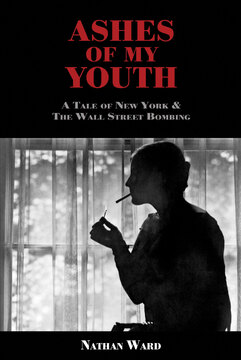
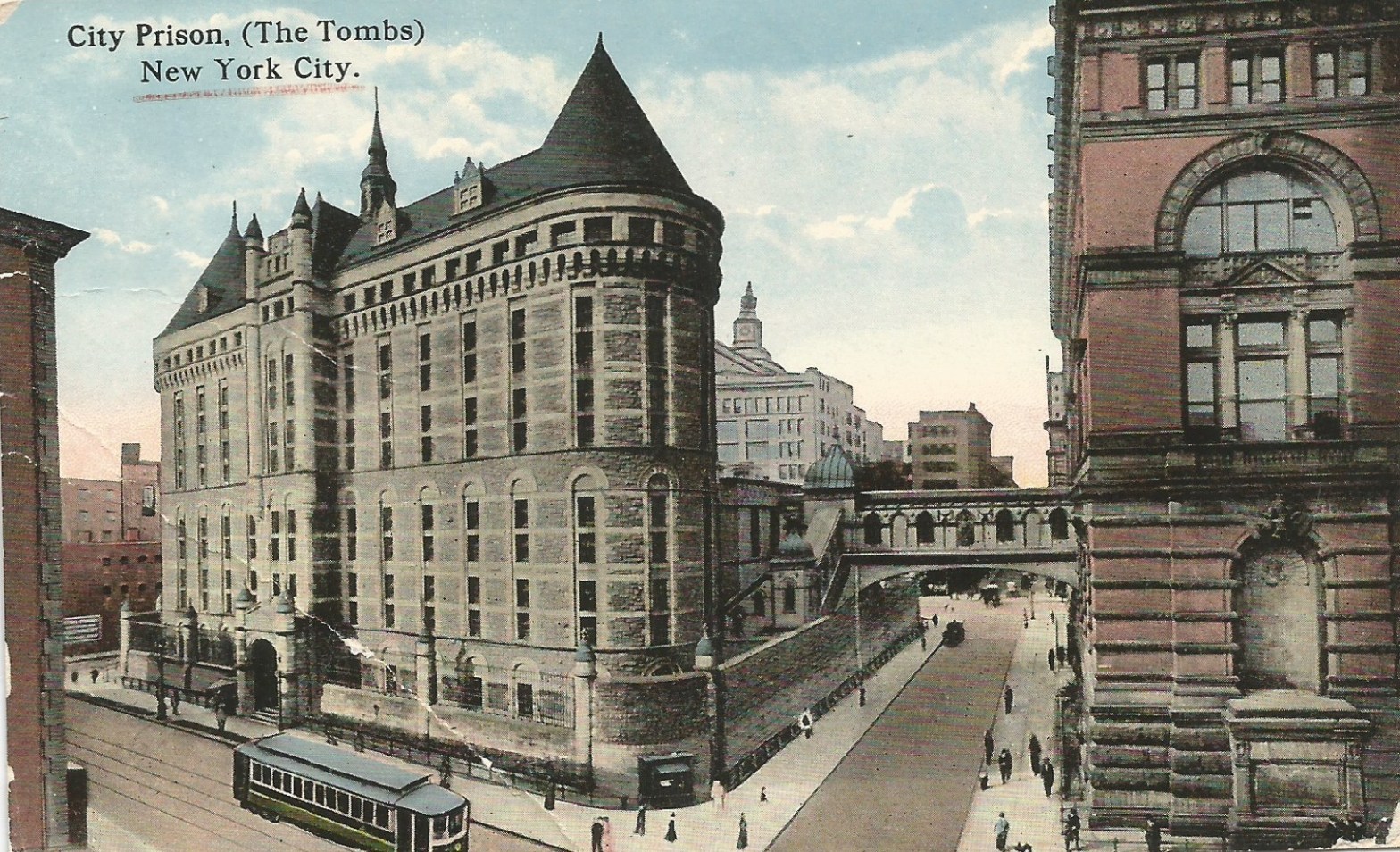
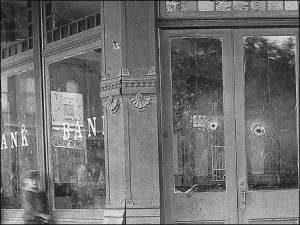
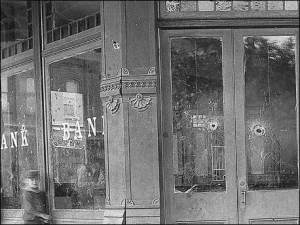
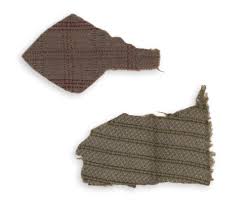

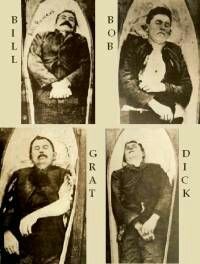
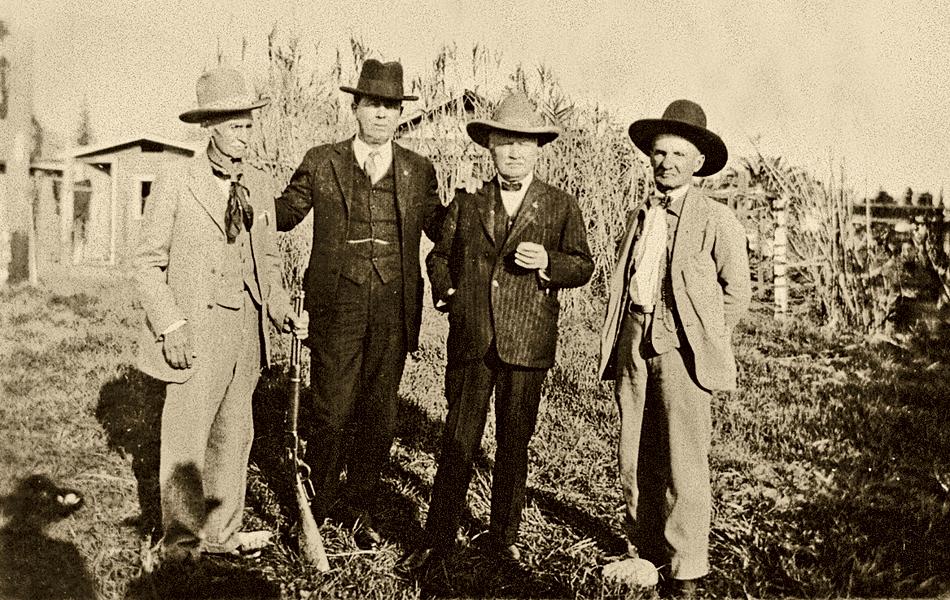
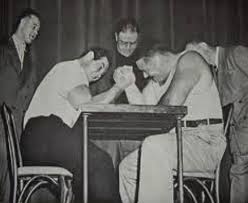

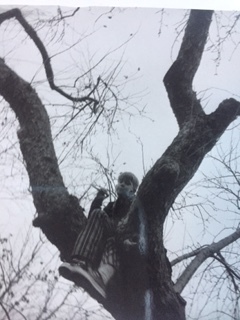


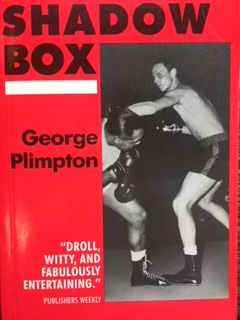


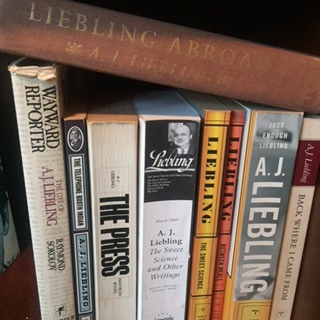
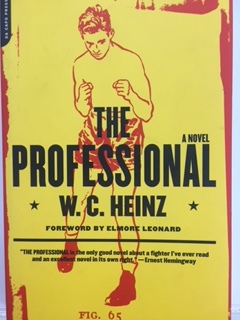
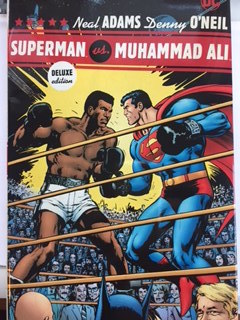
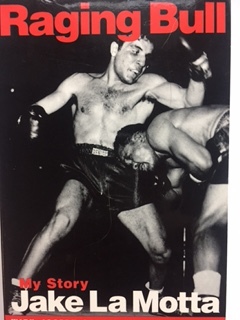
 Spy-Arts